

 Bengali
  English
  Arabic
  German
  French
  Spanish
  Turkish
  Italian
  Russian
  Persian
  Hebrew
  Persian (Afghanistan)
  Scottish Gaelic
  Panjabi
  Croatian
  Slovenian
  Greek
Greek  Afrikaans
  Czech
Czech  Korean
  Japanese
  Portuguese




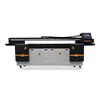
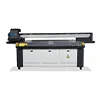
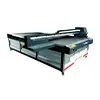
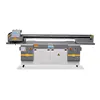
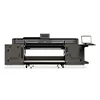

UV Printing on Leather and Flexible Materials: What Buyers Need to Know
চামড়ার উপর UV প্রিন্টিং makes it possible to print full-color images, logos, text, patterns and personalized designs directly onto genuine leather, PU leather and many other flexible materials. It is increasingly used for bags, shoe materials, wallets, desk mats, floor mats and home decoration products.
However, printing a good-looking sample is only the first step. Buyers also need to consider ink adhesion, material bending, surface coatings, white ink thickness and long-term resistance to cracking. A print may look perfect immediately after production but begin to peel or crack after the material is folded, stretched or sewn.
This guide explains which leather materials can be UV printed, why flexible UV ink is important, how to prevent ink cracking and how to choose between a UV flatbed printer and a conveyor belt flexible material printer.
What Leather and Flexible Materials Can Be UV Printed?
A UV printer can print on many types of leather and flexible materials, but results depend on the surface coating, texture, flexibility and final use of the product. Two materials that look similar may produce very different adhesion results.
For example, some PU leather surfaces accept UV ink easily, while others contain waterproof, oil-resistant or release coatings that reduce adhesion. Genuine leather may also contain natural oils or an uneven grain that affects image sharpness and color consistency.
| উপাদান | Can It Be UV Printed? | Main Challenge | Recommended Test |
|---|---|---|---|
| Genuine leather | Usually yes | Natural oils, grain and uneven surfaces | Adhesion, scratch and bending test |
| পিইউ চামড়া | Usually yes | Different surface coatings | Cleaning, primer and ink test |
| Synthetic leather | Usually yes | Unknown coating composition | Sample printing with actual material |
| Desk mats | Depends on the top surface | Bending, rolling and abrasion | Roll, scratch and friction test |
| Floor mats | Depends on the material | Wear resistance and deformation | Full-size production test |
| Shoe upper materials | Usually yes | Repeated folding during use | Repeated flexing test |
| Bag panels | Usually yes | Cutting, sewing and edge folding | Print, cut and sewing test |
The material name alone is not enough to confirm printability. A supplier may describe two products as PU leather, but each one may use a different protective coating. Therefore, buyers should always send the actual production material for sample testing before ordering a machine.
Why Flexible UV Ink Is Important for Leather Printing
Ink flexibility is one of the most important factors in successful leather printing. Standard rigid UV ink is mainly designed for hard products such as acrylic, wood, metal and rigid boards. After curing, it forms a relatively hard ink layer.
This hard surface can provide good scratch resistance on rigid products. However, when it is used on leather, shoe materials or flexible mats, the ink layer may crack when the material is bent or folded.
Rigid UV Ink vs Flexible UV Ink
Flexible UV ink is formulated to maintain a certain degree of flexibility after curing. It is more suitable for materials that will be bent, rolled, folded or slightly stretched during production and use.
Flexible ink is especially important for:
- Leather bags and luggage panels
- Wallets, card holders and notebook covers
- Shoe uppers and shoe components
- PU leather sheets
- Desk mats and gaming mats
- Floor mats and soft home decoration materials
However, flexible ink does not mean that every printed product can be folded without limitation. The final performance still depends on the material, ink thickness, curing settings and the degree of bending.
Why White Ink Thickness Matters
White ink is often required when printing on black, brown, red or other dark-colored leather. It creates an opaque base under the color image and improves color brightness.
However, a thicker white ink layer is not always better. Excessive white ink increases the total thickness of the printed layer. When the leather bends, this thicker layer may be more likely to crack.
For flexible products, the printing parameters should balance color opacity and bending resistance. A controlled white underbase is usually more practical than repeatedly increasing the number of white ink layers.
Be Careful With Heavy Varnish Layers
Varnish can create gloss, texture and raised effects, but it also adds thickness and hardness. Heavy varnish is not recommended on areas that will be repeatedly folded.
For decorative leather panels that remain relatively flat, varnish may be suitable. For wallets, shoes and soft bags, it should be used carefully and tested under realistic conditions.
Why Does UV Ink Crack or Peel Off Leather?
Cracking and peeling are different problems. Cracking usually means that the cured ink layer cannot follow the movement of the flexible material. Peeling often means that the ink did not form a strong bond with the surface.
| Problem | Possible Cause | Recommended Solution |
|---|---|---|
| Ink cracks after bending | Ink is too rigid | Use flexible UV ink and reduce ink thickness |
| Print peels off as one layer | Poor surface adhesion | Clean the surface and test a suitable primer |
| White ink cracks first | White layer is too thick | Reduce white ink coverage or printing passes |
| Colors look dull | Dark material affects the color layer | Add a controlled white ink underbase |
| Image shifts during printing | Material is not held flat | Improve vacuum adsorption or use positioning fixtures |
| Printed surface remains sticky | Insufficient curing | Adjust UV power, speed and ink volume |
| Print wears quickly | Heavy friction during use | Test protective layers or reconsider the printing process |
Surface Coatings Can Reduce Adhesion
Leather and PU materials may contain oil-resistant, waterproof, anti-stain or protective surface treatments. These coatings can prevent UV ink from bonding directly with the material.
Before printing, the surface should be clean and free from dust, grease and production residue. In some cases, a suitable primer may improve adhesion. However, primer selection should be based on testing because an unsuitable primer may change the appearance, gloss or feel of the leather.
Over-Curing Can Make the Ink Layer Too Hard
UV curing must be strong enough to cure the ink, but excessive curing may make the printed layer harder and less flexible. Printing speed, UV lamp power and ink volume should be adjusted together.
The best settings are not always the maximum UV power or maximum ink coverage. Stable production requires a balance between curing, adhesion, color density and flexibility.
Real Product Use Matters More Than a Flat Sample
A flat printed sample may pass a basic scratch test but fail after sewing, folding or repeated use. Testing should reproduce the real production process.
For example, a shoe upper should be bent repeatedly. A printed bag panel should be cut, stitched and folded around the edges. A desk mat should be rolled and unrolled. A floor mat should be tested for friction and surface wear.
A Stable Workflow for UV Printing on Leather
A standard testing and production workflow helps reduce waste and improve consistency. The following steps can be used for genuine leather, PU leather and most flexible materials.
Step 1: Identify the Exact Material
Confirm whether the material is genuine leather, PU leather, PVC leather, synthetic leather or another flexible composite. Also check whether it has a waterproof or protective coating.
The supplier should know the final product application, because a decorative wall panel has different durability requirements from a shoe upper or wallet.
Step 2: Confirm the Final Processing Method
Ask whether the material will be cut, folded, rolled, sewn, glued, pressed or stretched after printing. In many cases, printing flat sheets before cutting and sewing provides better positioning and production efficiency.
Step 3: Clean the Surface
Remove dust, grease and other residues. Use a cleaning method that does not damage the surface coating or change the leather color. Always test the cleaning process on a small area first.
Step 4: Perform an Adhesion Test
Print small samples with different parameters. Buyers can compare:
- Printing without primer
- Printing with a tested primer
- Different white ink thicknesses
- Different color ink volumes
- Different UV curing settings
Step 5: Select the Correct Ink
Use flexible UV ink when the product will be bent or folded. For products that remain flat, standard UV ink may still be suitable, but this should be confirmed through testing.
Step 6: Secure the Material
Soft materials must remain flat during printing. Wrinkles, raised edges or movement can cause image misalignment or printhead contact.
A vacuum platform is useful for cut sheets and small leather panels. A conveyor belt system is more suitable for larger flexible materials that need continuous feeding.
Step 7: Conduct Real-Use Durability Tests
A complete test may include:
- Cross-hatch or tape adhesion test
- Fingernail scratch test
- Repeated bending test
- Folding test
- Rolling test
- Dry and wet friction test
- Cutting and sewing test
Only after these tests should the printing parameters be saved for batch production.
UV Flatbed Printer vs Conveyor Belt Flexible Material Printer
One of the most common questions from buyers is whether they need a UV flatbed printer or a conveyor belt flexible material printer. The answer depends on material size, material format, product thickness and expected production volume.
When to Choose a UV Flatbed Printer
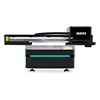
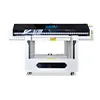
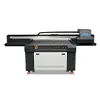
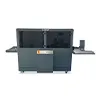
A UV flatbed printer is suitable for cut leather sheets, semi-finished parts and completed products that can be placed on a flat platform.
Typical applications include:
- Wallet panels
- Card holders
- Leather notebook covers
- Bag components
- Luggage tags
- Small shoe components
- Leather gift products
The main advantages are precise positioning, flexible product placement and the ability to use customized fixtures. A flatbed printer can also handle rigid products, making it suitable for businesses that print on both leather and materials such as acrylic, wood, metal or glass.
However, very soft or large materials may require strong vacuum adsorption, additional tape or positioning tools to remain flat.
When to Choose a Conveyor Belt UV Printer
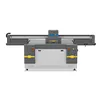
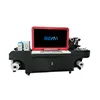
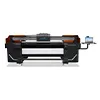
A conveyor belt printer is designed for large, flexible or continuously supplied materials. Instead of placing every item on a fixed platform, the material is transported through the printing area by a belt system.
It is more suitable for:
- Large PU leather sheets
- Shoe upper materials
- Desk mats
- Gaming mats
- Floor mats
- Decorative flexible panels
- Large-format leather products
A well-designed conveyor system can improve loading efficiency and support continuous batch production. However, material feeding accuracy, vacuum suction and anti-deviation control are important. If the material moves sideways during printing, the image position may change.
Is a Conveyor Belt Printer the Same as a Roll-to-Roll Printer?
No. A conveyor belt printer and a roll-to-roll printer are not exactly the same.
A conveyor belt printer can transport individual sheets, cut flexible pieces and some continuous materials. A roll-to-roll printer is mainly designed for materials supplied and collected in rolls.
Buyers should not choose a machine only because the material is flexible. They should also confirm whether the material is supplied as individual sheets, large cut pieces or continuous rolls.
| Production Requirement | প্রস্তাবিত প্রিন্টারের ধরণ |
|---|---|
| Small personalized leather products | Small UV flatbed printer |
| Cut bag and wallet panels | Medium UV flatbed printer |
| Large shoe material sheets | Conveyor belt flexible material printer |
| Wide desk mats and floor mats | Wide-format conveyor belt printer |
| Continuous roll materials | Roll-to-roll or hybrid printer |
| Mixed rigid and flexible products | Flatbed or suitable hybrid printer |
Popular Applications for Leather and Flexible Material Printing
UV printing allows manufacturers to produce colorful, detailed and personalized leather products without traditional printing plates. This is especially useful for short runs, samples and customized orders.
1. Bags and Luggage
A leather UV printer can print brand logos, decorative graphics, names, patterns and limited-edition designs on bag panels and luggage components.
For better production efficiency, many factories print on flat panels before cutting and sewing. This helps keep the material flat and makes image positioning easier.
2. Shoes and Shoe Materials
UV printing can be used for shoe uppers, shoe tongues, decorative panels, labels and sample development. Flexible ink is important because shoe materials are repeatedly bent during use.
Before mass production, the printed material should pass repeated bending, friction and sewing tests.
3. Wallets and Small Leather Goods
Wallets, card holders, keychains, notebook covers, phone cases and leather labels are suitable for personalized printing. These products often have a higher value per printed area and are attractive for small customization businesses.
4. Desk Mats and Gaming Mats
Customized desk mats can be printed with company logos, game graphics, branding, maps, illustrations or personalized designs. Wide-format flexible material printers are more efficient when producing larger quantities or larger mat sizes.
5. Floor Mats
Floor mats can be used for home decoration, brand promotion, store entrances and commercial directional graphics. Because floor mats experience frequent friction, the material surface and durability requirements must be tested carefully.
6. Home and Interior Decoration
Printed leather and flexible materials can be used for decorative wall panels, furniture surfaces, hotel decoration, interior artwork and customized soft furnishings.
These applications usually experience less bending than shoes or wallets, allowing more freedom in color, white ink and decorative varnish effects.
Is Leather UV Printing a Good Business Opportunity?
Leather UV printing can be a valuable business opportunity, but profitability depends on the target product, order size, material cost, ink coverage, production speed and selling price.
It is generally more attractive for businesses that need customization, short-run production or fast sample development.
Small-Batch Customization
Small UV flatbed printers can support personalized leather products without requiring printing plates. This is suitable for:
- Gift customization shops
- Online sellers
- Creative studios
- Promotional product suppliers
- Local printing businesses
Customers can submit different names, logos or artwork for each order. Although the quantity may be small, customized products can usually be sold at a higher price than standard products.
Sampling and Product Development
Bag factories, shoe manufacturers and home decoration companies can use UV printing to produce samples before mass production.
This can help businesses:
- Reduce traditional plate-making requirements
- Test more designs in a shorter time
- Show customers realistic product samples
- Reduce the cost of small trial orders
- Shorten new product development cycles
Batch Production
Batch production is possible when the material, design and processing method are standardized. A conveyor belt flexible material printer may provide better loading efficiency for large sheets and repeated production.
Before investing in a production machine, buyers should calculate:
- Average daily order volume
- Maximum material width
- Ink consumption and white ink coverage
- Labor requirements
- Expected waste rate
- Cleaning and maintenance cost
- Product selling price
A supplier should not promise a fixed payback period without understanding these factors. A realistic business evaluation should be based on the buyer’s actual products and local market.
How to Choose a Leather UV Printer
নির্বাচন করা a leather UV printer requires more than comparing printing speed, printhead quantity and machine price. Buyers should first understand the material and final product requirements.
1. What Type of Leather Will You Print?
Confirm whether you will print genuine leather, PU leather, synthetic leather, shoe material, desk mats or floor mats. Different surfaces require different cleaning, ink and curing settings.
2. Will the Material Be Bent or Folded?
If the product will be repeatedly bent, flexible UV ink should be considered. The supplier should perform a bending test using your actual material.
3. Is the Material Supplied as Sheets or Rolls?
Cut sheets and finished parts are often suitable for flatbed printers. Large flexible sheets are easier to handle on a conveyor belt printer. Continuous rolls may require roll-to-roll equipment.
4. What Is the Maximum Material Width?
Choose the printing width based on your largest regular product, not only your current sample. A wider machine may be necessary for desk mats, shoe materials and home decoration applications.
5. Do You Need White Ink?
White ink is normally required for dark or colored leather. Buyers should check the printer’s white ink circulation, stirring and maintenance system because stable white ink performance is important for daily production.
6. Do You Need Varnish?
Varnish is useful for decorative gloss, texture and raised effects. However, it may not be suitable for products that require frequent folding. Confirm the final use before selecting the ink configuration.
7. Can the Printer Hold Soft Materials Flat?
For a flatbed printer, check the vacuum adsorption performance. For a conveyor printer, check belt suction, feeding accuracy and material deviation control.
8. Can the Supplier Test Your Actual Material?
A professional supplier should be able to print your sample and provide clear photos or videos of:
- প্রিন্ট গুণমান
- White ink opacity
- Surface adhesion
- Bending performance
- Scratch resistance
- Production speed
9. Are Training, Ink and Spare Parts Available?
Buyers should confirm installation support, software training, maintenance instructions, ink supply and spare parts availability before ordering.
Businesses handling cut leather parts and mixed rigid materials can learn more about our UV flatbed printer solutions.
Information to Send Before Requesting a Printing Test
To receive a more accurate printer recommendation, prepare the following information:
- Material name and supplier information
- Clear photos of the material surface
- Material size and thickness
- Whether the material is supplied as sheets or rolls
- Whether the product will be bent, rolled or folded
- Whether cutting or sewing is required after printing
- Required printing width
- Expected daily production volume
- Whether white ink or varnish is required
- Final product application
This information allows the printer supplier to evaluate ink flexibility, material feeding, platform size and production efficiency before recommending a machine.
Frequently Asked Questions About UV Printing on Leather
Can a UV printer print on genuine leather?
Yes, many genuine leather materials can be UV printed. However, natural oils, surface grain and protective coatings may affect adhesion and image quality. Actual material testing is recommended before production.
Is UV printing suitable for PU leather?
Yes, UV printing on PU leather is widely used for bags, shoes, wallets and decoration products. Because PU coatings vary between suppliers, each material should be tested for adhesion and bending resistance.
Does leather need primer before UV printing?
Not every leather material requires primer. Some surfaces provide good adhesion after cleaning, while others need surface treatment. Test both untreated and primed samples before choosing a production process.
Will UV ink crack when leather is bent?
UV ink may crack if the ink is too rigid, the printed layer is too thick or the material is folded beyond the ink’s flexibility. Flexible UV ink, controlled white ink thickness and suitable curing settings can reduce this risk.
What type of UV ink is best for leather?
Flexible UV ink is generally more suitable for leather products that will be bent, folded or rolled. Standard UV ink may still be suitable for decorative leather panels that remain flat.
Is a flatbed or conveyor belt printer better for leather?
A flatbed printer is suitable for cut sheets, small leather parts and mixed products. A conveyor belt flexible material printer is better for large leather sheets, shoe materials, desk mats and higher-volume production.
Can a UV printer print desk mats and floor mats?
Yes, many desk mats and floor mats can be UV printed if their surfaces accept the ink. Because these products are rolled, bent or exposed to friction, durability testing is important.
How should buyers test leather before purchasing a printer?
Buyers should request sample printing with their actual production material. The test should include adhesion, scratching, bending, folding, rolling and any cutting or sewing processes used in the final product.
উপসংহার
UV printing on leather offers opportunities in customized bags, shoe materials, wallets, desk mats, floor mats and home decoration. However, stable production requires more than printing a colorful sample.
Buyers must consider the material coating, ink flexibility, white ink thickness, curing settings, product bending and the correct machine structure. A UV flatbed printer is often suitable for cut parts and customized products, while a conveyor belt flexible material printer is more efficient for large sheets and continuous production.
The safest way to choose a machine is to test the actual material under realistic production conditions.
Request a Leather Printing Test
Send us your leather or flexible material sample, product dimensions, expected production volume and final application. We can evaluate print quality, adhesion, bending performance and recommend a suitable printer configuration.