

 Greek
Greek  English
  Arabic
  German
  French
  Spanish
  Turkish
  Italian
  Russian
  Persian
  Bengali
  Hebrew
  Persian (Afghanistan)
  Scottish Gaelic
  Panjabi
  Croatian
  Slovenian
  Afrikaans
  Czech
Czech  Korean
  Japanese
  Portuguese






UV Printing on Cardboard and Corrugated Boxes: A Short-Run Custom Packaging Guide
Many packaging businesses do not need thousands of identical boxes. They may need one packaging prototype, 50 branded cartons, 100 promotional gift boxes or several packaging versions for different products. In these situations, UV printing on cardboard provides a flexible way to print logos, text, barcodes and full-color graphics directly onto packaging materials without producing printing plates.
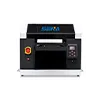
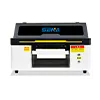
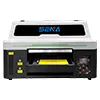
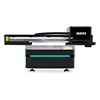
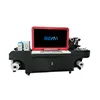
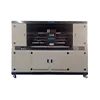
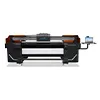
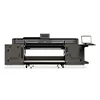
A UV flatbed printer can be used for corrugated cardboard, kraft boxes, coated paperboard, rigid gift boxes and even wooden packaging. It is especially valuable for packaging samples, short-run customization and orders with frequently changing artwork.
However, not every cardboard material produces the same result. Surface texture, flatness, coating, material color and folding requirements all influence printing quality. This guide explains what packaging materials can be printed, how to achieve stable results and whether a custom packaging printer is suitable for your business.

Πίνακας περιεχομένων
- Can a UV Printer Print on Cardboard?
- What Packaging Materials Can Be Printed?
- Why UV Printing Works for Short Runs
- How to Achieve Stable Printing Results
- Printing Barcodes, Small Text and Logos
- Packaging Sample Production Workflow
- UV Printer vs. Corrugated Box Printer
- Is Custom Packaging Printing Profitable?
- How to Choose a Box Printing Machine
- Συχνές Ερωτήσεις
Can a UV Printer Print on Cardboard and Corrugated Boxes?
Yes. A UV flatbed printer can print directly on many types of cardboard and corrugated packaging materials. UV ink is deposited onto the surface and cured immediately by UV lamps, allowing the printer to reproduce text, logos, product images and decorative graphics without using traditional printing plates.
The best results are usually achieved when the material is flat, clean and stable. Common printable materials include:
- Flat corrugated cardboard sheets
- Brown kraft cardboard
- White coated paperboard
- Folding cartons before assembly
- Rigid gift boxes
- Cardboard display panels
- Wooden packaging boxes
For standard corrugated cartons, printing the flat sheet before folding and gluing is normally easier than printing a fully assembled box. Flat materials can be positioned more accurately, held by a vacuum platform and kept at a consistent distance from the printhead.
Some assembled boxes can also be printed if their surface is level and their height is within the printer’s maximum clearance. However, raised edges, handles, lids and uneven structures must be checked carefully to avoid contact with the printhead.
What Packaging Materials Can Be UV Printed?
Corrugated Cardboard
Corrugated cardboard is widely used for shipping cartons, e-commerce boxes, product displays and retail packaging. A UV printer can print directly on the outer surface of the cardboard, including logos, handling instructions, product graphics and promotional messages.
The main challenge is material flatness. Corrugated sheets may bend or rise at the edges, especially after storage in a humid environment. A vacuum adsorption platform helps keep the sheet stable during printing, but severely warped cardboard should be flattened or replaced before production.
Brown Kraft Cardboard and Kraft Boxes
Brown kraft packaging is popular because it creates a natural and environmentally conscious appearance. However, the brown background changes how printed colors look. Light colors may appear darker, while certain brand colors may lose contrast.
There are two common printing methods:
- Color only: Suitable for black graphics, dark logos and designs that intentionally use the kraft background.
- White ink plus color: Suitable for bright brand colors, photographs and graphics that require higher contrast.
A white ink base creates a more neutral background before the color layer is printed. This is useful for premium kraft packaging, but it also increases ink usage and printing time.
Folding Cartons and Coated Paperboard
Folding cartons are commonly used for cosmetics, electronics, accessories, gifts and retail products. Their surfaces may be coated, laminated, glossy or matte.
Because different coatings can affect UV ink adhesion, a sample test should be completed before production. A surface that looks similar may behave differently depending on the coating material, lamination process and surface treatment.
Rigid Gift Boxes
Rigid boxes are often used for jewelry, perfume, electronics, luxury products and corporate gifts. These products are usually produced in smaller quantities and have a higher value per unit, making them suitable for digital customization.
A UV flatbed printer can add:
- Brand logos
- Customer names
- Decorative patterns
- White ink effects
- Spot varnish
- Limited-edition numbering
Wooden Packaging Boxes
Wooden boxes are widely used for tea, wine, gifts, souvenirs and premium product packaging. UV printing can reproduce logos, illustrations, instructions and personalized information directly on the wood surface.
Wood grain, surface roughness and coatings can affect the final result. For more detailed information, read our guide: UV Printing on Wood: How to Achieve Clear Images and Strong Adhesion.

Why Is UV Printing Suitable for Short-Run Custom Packaging?
No Printing Plates Are Required
Traditional packaging printing methods may require printing plates, setup procedures and minimum order quantities. These costs can be reasonable for large production runs, but they can make samples and small orders expensive.
UV digital printing reads the artwork directly from a computer. A new design can be loaded without producing a new printing plate. This provides several advantages:
- Lower setup cost for packaging samples
- Faster design changes
- Shorter preparation time
- Flexible production quantities
- Multiple designs within one order
- Less unused packaging inventory
Economical for Small Quantities
A UV flatbed printer can be useful for orders such as:
- One packaging prototype for customer approval
- Twenty gift boxes for an event
- Fifty boxes for a new product launch
- One hundred customized e-commerce packages
- Several small batches for different product models
The actual production cost depends on the box size, printing area, ink coverage, white ink requirement, print resolution and loading method. A short-run order may have a higher printing cost per box than mass production, but customers are often willing to pay more for low quantities, quick delivery and customized artwork.
Flexible Designs and Variable Information
A custom packaging printer can produce different information on each sheet or box. Possible applications include:
- Different product names
- Regional language versions
- Serial numbers
- Customer names
- Κωδικοί QR
- Batch information
- Seasonal graphics
- Limited-edition packaging
This flexibility is useful for brands that manage many product variations but do not want to keep large quantities of pre-printed packaging in stock.
How to Achieve Stable UV Printing on Cardboard
Keep the Cardboard Flat
Cardboard must remain stable throughout the printing process. Raised edges or uneven areas can change the distance between the material and the printhead, reducing image sharpness and increasing the risk of a printhead collision.
Before printing:
- Check whether the cardboard is warped.
- Measure the actual material thickness.
- Use the vacuum adsorption platform when available.
- Keep the cardboard edges away from the printhead path.
- Store materials in a dry and stable environment.
Clean the Surface
Corrugated and kraft cardboard may contain paper dust or loose fibers. These particles can reduce adhesion and may contaminate the printing area.
Use clean air, a soft brush or another suitable method to remove dust before printing. Avoid touching the printable surface with oily or dirty hands.
Test Coated and Laminated Materials
Uncoated cardboard often has an absorbent and textured surface, while coated paperboard may be smooth and less absorbent. Laminated surfaces can be even more difficult because UV ink remains mainly on top of the film.
A production test should evaluate:
- Ink adhesion
- Scratch resistance
- Color appearance
- Folding performance
- Barcode readability
Some smooth or laminated surfaces may require a suitable primer or surface treatment. The correct process should be confirmed using the customer’s actual material rather than relying only on the material name.
Use White Ink When Necessary
White ink is not required for every cardboard application. It is most useful when printing on brown, black or colored packaging and when the original brand colors must remain bright.
Common ink configurations include:
| Διαμόρφωση μελανιού | Suitable Application |
|---|---|
| Color only | White cardboard, black text and natural kraft designs |
| White plus color | Brown, black or colored packaging requiring bright graphics |
| White, color and varnish | Premium packaging, highlighted logos and decorative effects |
Control Printhead Height and UV Curing
The printhead height should be set according to the highest point of the material. Keeping an appropriate printing distance helps maintain text clarity and reduces ink mist.
UV curing settings must also match the material and printing speed. Insufficient curing can reduce durability, while unsuitable settings may affect flexibility or create an overly brittle ink layer.
Test Folding and Creasing Areas
A printed sheet may look perfect while flat but develop cracks after folding. This is particularly important when using thick white ink layers or varnish near a crease.
To reduce problems:
- Keep important graphics away from cutting and creasing lines.
- Avoid unnecessarily thick ink layers on folding areas.
- Complete a folding test before approving production.
- Check the finished assembled box, not only the flat printed sheet.
How to Print Clear Barcodes, Small Text and Brand Graphics
Barcode and QR Code Printing
Barcodes and QR codes must be readable, not simply visible. Material texture, low contrast, ink spread and incorrect file preparation can reduce scanning performance.
For better results:
- Use a high-quality or vector source file.
- Maintain sufficient contrast between the code and background.
- Leave a clear blank area around the barcode.
- Avoid printing critical codes directly across deep corrugation lines.
- Print a sample at the final production size.
- Test the code using the actual scanning device.
- Repeat scanning inspections during production.
Small Text and Product Information
UV printing can reproduce product models, ingredients, instructions, warning information, website addresses and other small text. However, readability depends on font size, artwork quality, material texture and printing resolution.
Very small text should be tested on the actual cardboard. A smooth coated board normally reproduces finer details more clearly than a rough corrugated surface.
Logos and Full-Color Graphics
Vector artwork is recommended for logos and line graphics because it can be resized without losing sharpness. High-resolution images should be used for photographs and full-color product graphics.
On brown cardboard, the original surface color becomes part of the design unless a white ink layer is printed first. This effect can be attractive for natural packaging, but it should be confirmed with the customer before production.

A Practical Workflow for Packaging Samples and Short Orders
- Confirm the material. Identify whether the customer is using corrugated cardboard, kraft board, coated paperboard or wood.
- Confirm the unfolded size. Machine selection should be based on the flat material dimensions, not only the finished box size.
- Check material flatness. Warped or damaged sheets should not enter production.
- Prepare the artwork. Include the correct printing area, cutting lines, creasing lines and safe margins.
- Select the ink layers. Decide whether the job requires color only, white plus color or varnish.
- Print one sample. Use the same material and production settings planned for the final order.
- Test the result. Check adhesion, scratching, color, folding and barcode readability.
- Obtain customer approval. Confirm the physical sample before producing the complete order.
- Start short-run production. Use positioning tools or templates to maintain consistency.
- Inspect the finished boxes. Check printing, cutting, creasing, folding and assembly.
This workflow reduces communication errors and helps prevent expensive material waste. For custom packaging, a physical sample is often more reliable than approving a design only through a computer screen.
UV Flatbed Printer vs. Dedicated Corrugated Box Printing Machine
A UV flatbed printer and a dedicated corrugated printer can both print packaging, but they are designed for different production requirements.
| Comparison | Εκτυπωτής επίπεδης επιφάνειας UV | Dedicated Corrugated Printer |
|---|---|---|
| Best application | Samples, short runs and premium packaging | Medium and large-volume carton production |
| Printable materials | Cardboard, wood, acrylic, metal, glass and more | Mainly corrugated cardboard |
| Λευκό μελάνι | Commonly available | Depends on machine configuration |
| Job changeover | Flexible for frequently changing designs | Optimized for continuous production |
| Loading method | Manual or semi-automatic | Automatic feeding options |
| Suitable customer | Print shops, sample makers and customization businesses | Corrugated box factories |
| Main advantage | Material flexibility and detailed image quality | Production speed and throughput |
A UV flatbed printer is normally a better choice when the business needs to print multiple materials, create packaging samples or accept short orders. A dedicated corrugated box printing machine is more suitable when the main requirement is continuous production of large quantities of cartons.
Is Custom Packaging Printing a Profitable Business?
Custom packaging can become a profitable service when a company focuses on orders that traditional mass-production suppliers do not handle efficiently.
Where the Profit Comes From
The business value is not limited to ink and printing time. A packaging supplier can charge for:
- Packaging prototype production
- Small-order setup
- Urgent delivery
- Personalized artwork
- Multiple design versions
- White ink and varnish effects
- Artwork preparation
- Cutting and creasing
- Folding and box assembly
Customers are often willing to pay more when they need a small quantity, quick confirmation or packaging produced for a specific event, product launch or marketing campaign.
Suitable Customer Groups
A custom packaging printer may be suitable for:
- Packaging sample manufacturers
- Advertising and sign companies
- Gift customization businesses
- E-commerce packaging suppliers
- Small packaging factories
- Cosmetic packaging suppliers
- Electronics packaging suppliers
- Wooden box manufacturers
- Event and wedding product companies
- Local short-run printing services
When the Investment Makes Sense
UV packaging printing is more attractive when:
- Order quantities are small.
- Customers manage many product SKUs.
- Artwork changes frequently.
- Fast sample production is required.
- The printer will also be used for wood, acrylic, metal or other materials.
- Customers value customization more than the lowest possible unit price.
When It May Not Be the Best Choice
A standard UV flatbed printer may not be the most efficient option when a factory produces thousands of identical shipping cartons every day or requires an automated line for feeding, printing, slotting, cutting, folding and gluing.
Food packaging also requires careful evaluation. Unless the ink, machine configuration and production process have the necessary compliance for the target market, printing should generally be limited to the external, non-food-contact surface. Local regulations and customer requirements must always be confirmed.

How to Choose a Box Printing Machine
Μέγεθος εκτύπωσης
Choose the printing area according to the unfolded cardboard sheet. A finished box may look small after assembly, but its flat layout can require a much larger printing platform.
Maximum Material Height
If the business plans to print assembled gift boxes, wooden boxes or thicker packaging products, check the printer’s maximum material clearance.
Vacuum Adsorption Platform
A stable vacuum platform helps keep thin cardboard and corrugated sheets flat. The platform should provide even suction across the working area without damaging lightweight materials.
White Ink Configuration
White ink is recommended when the main products include kraft boxes, black packaging, colored cardboard or dark wooden boxes. It is less important when most jobs use white coated paperboard.
Varnish Printing
Varnish can create spot gloss, raised logos and decorative textures. It adds value to premium packaging but also increases production time. Varnish should be tested carefully around folds and creases.
Text and Barcode Quality
Do not evaluate a printer only by its maximum advertised resolution. Ask the supplier to print the actual packaging file, including the smallest text, barcode and QR code used in production.
Όγκος Παραγωγής
For packaging samples and small orders, a standard UV flatbed printer may be sufficient. Higher daily volumes may require a larger platform, faster printhead configuration, conveyor system or dedicated corrugated printing equipment.
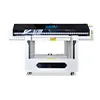
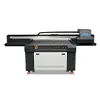
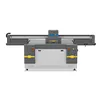
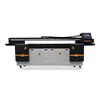
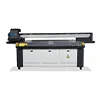
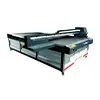
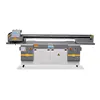
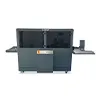
You can explore different machine sizes in our UV flatbed printer category.
Συχνές Ερωτήσεις
Can a UV printer print directly on corrugated cardboard?
Yes. UV printers can print directly on flat corrugated cardboard. The material should be clean, flat and securely positioned during printing.
Is coating required before UV printing on cardboard?
Many uncoated cardboard materials can be printed without a primer. Smooth, laminated or specially coated surfaces may require testing or surface treatment to achieve sufficient adhesion.
Can UV printers print on brown kraft boxes?
Yes. Color ink can be printed directly on kraft cardboard, but the brown background will affect the final color. White ink can be added when brighter and more accurate colors are required.
Can barcodes and QR codes be printed clearly on cardboard?
Yes, provided that the artwork is prepared correctly and the cardboard surface is suitable. Every production barcode should be tested using the intended scanning equipment.
Can a UV printer print on assembled boxes?
Some assembled boxes can be printed if the printable area is level and the box height is within the machine’s clearance. Flat sheets are generally easier and safer to print.
Will UV ink crack when the box is folded?
Cracking can occur if the ink layer is too thick or the printed area crosses a strong crease. Folding tests should be completed before production, especially when using white ink or varnish.
Is UV printing suitable for food packaging?
Food packaging must comply with local regulations and customer requirements. Unless the ink and production system have the appropriate compliance, UV printing should be limited to the external, non-food-contact surface.
What is the best box printing machine for short runs?
A UV flatbed printer is often suitable for short-run packaging, samples and multiple materials. The correct printing size, white ink configuration and platform type depend on the customer’s actual products.
Is UV printing suitable for mass carton production?
UV flatbed printing is more suitable for samples, short runs and high-value customization. Dedicated corrugated printing equipment may be more efficient for continuous, high-volume carton production.
Can the same printer print cardboard and wooden boxes?
Yes. One of the main advantages of a UV flatbed printer is its ability to print multiple rigid materials, including cardboard, wood, acrylic, metal and glass.
Σύναψη
UV printing on cardboard provides a practical solution for packaging samples, corrugated boxes, kraft packaging, rigid gift boxes and short-run customized orders. It eliminates the need for printing plates and allows businesses to change artwork quickly, produce multiple designs and accept smaller order quantities.
Stable results depend on material flatness, surface condition, ink adhesion, printhead height and correct white ink settings. Barcodes, small text and folding areas should always be tested on the actual packaging material before production.
This application is especially suitable for packaging sample makers, customization companies, e-commerce packaging suppliers, gift businesses and print shops that need flexible production rather than continuous mass carton manufacturing.
Test Your Packaging Material Before Choosing a Printer
Send us your cardboard type, unfolded box size, artwork and expected order quantity. We can help you evaluate the printing process, prepare a sample and recommend a suitable machine configuration.