

 Japanese
  English
  Arabic
  German
  French
  Spanish
  Turkish
  Italian
  Russian
  Persian
  Bengali
  Hebrew
  Persian (Afghanistan)
  Scottish Gaelic
  Panjabi
  Croatian
  Slovenian
  Greek
Greek  Afrikaans
  Czech
Czech  Korean
  Portuguese





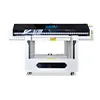
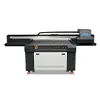
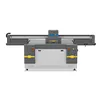
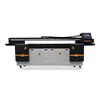
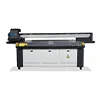
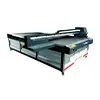
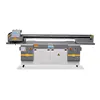


UV Printer Total Cost of Ownership: A Complete Cost Breakdown for Flatbed Printers
の UV printer total cost of ownership is much more than the price shown on a supplier quotation. A lower purchase price may look attractive, but ink consumption, maintenance, printhead replacement, electricity, material waste and production downtime can significantly change the real cost of owning the machine.
This guide explains how to calculate the five-year cost of a UV flatbed printer, estimate the actual production cost per square meter and compare different machine quotations under the same operating conditions. It is designed for print shops, sign manufacturers, custom product businesses and industrial buyers who want to make a more accurate investment decision.

What Is UV Printer Total Cost of Ownership?
Total cost of ownership, usually shortened to TCO, is the complete cost of purchasing, operating, maintaining and eventually replacing or reselling a machine. For a UV flatbed printer, TCO covers the entire ownership period rather than only the initial equipment payment.
UV Printer Purchase Price vs. Total Ownership Cost
The purchase price is a one-time cost. Total ownership cost includes both the initial investment and all expenses generated during daily production.
Two UV printers with similar specifications may have very different long-term costs. One machine may cost less initially but require more frequent cleaning, consume more white ink, suffer longer downtime or depend on expensive imported spare parts. Another machine may have a higher purchase price but deliver more stable production and lower waste.
Why TCO Matters Before Buying a UV Flatbed Printer
Calculating TCO helps a buyer answer several important questions:
- Can the business afford the machine after the initial purchase?
- How much will each square meter of sellable output cost?
- Which supplier quotation offers better long-term value?
- How much working capital is required for ink, parts and maintenance?
- How should the company price its printing services?
- How long may it take to recover the investment?
Basic UV Printer TCO Formula
Machine Purchase Cost
+ Shipping and Installation
+ Site Preparation
+ Ink and Cleaning Fluids
+ Electricity
+ Routine Consumables
+ Maintenance and Repairs
+ Printhead and Parts Replacement
+ Software and Upgrades
+ Downtime Losses
− Residual Value
Fixed Costs and Variable Costs
UV printer costs can be separated into fixed and variable costs.
Fixed costs do not change directly with each printed square meter. Typical examples include equipment depreciation, software licenses, scheduled maintenance, insurance and site preparation.
Variable costs increase as production volume increases. These include ink, cleaning fluid, electricity, direct labor, substrate waste and routine consumables.
This distinction is important because higher machine utilization spreads fixed costs over more saleable output. A machine operating at 70% capacity usually has a lower fixed cost per square meter than the same machine operating at 20% capacity.
One-Time Costs of Buying a UV Flatbed Printer
UV Printer Purchase Cost
The machine purchase price is normally the largest one-time expense, but it should not be evaluated without considering the included configuration.
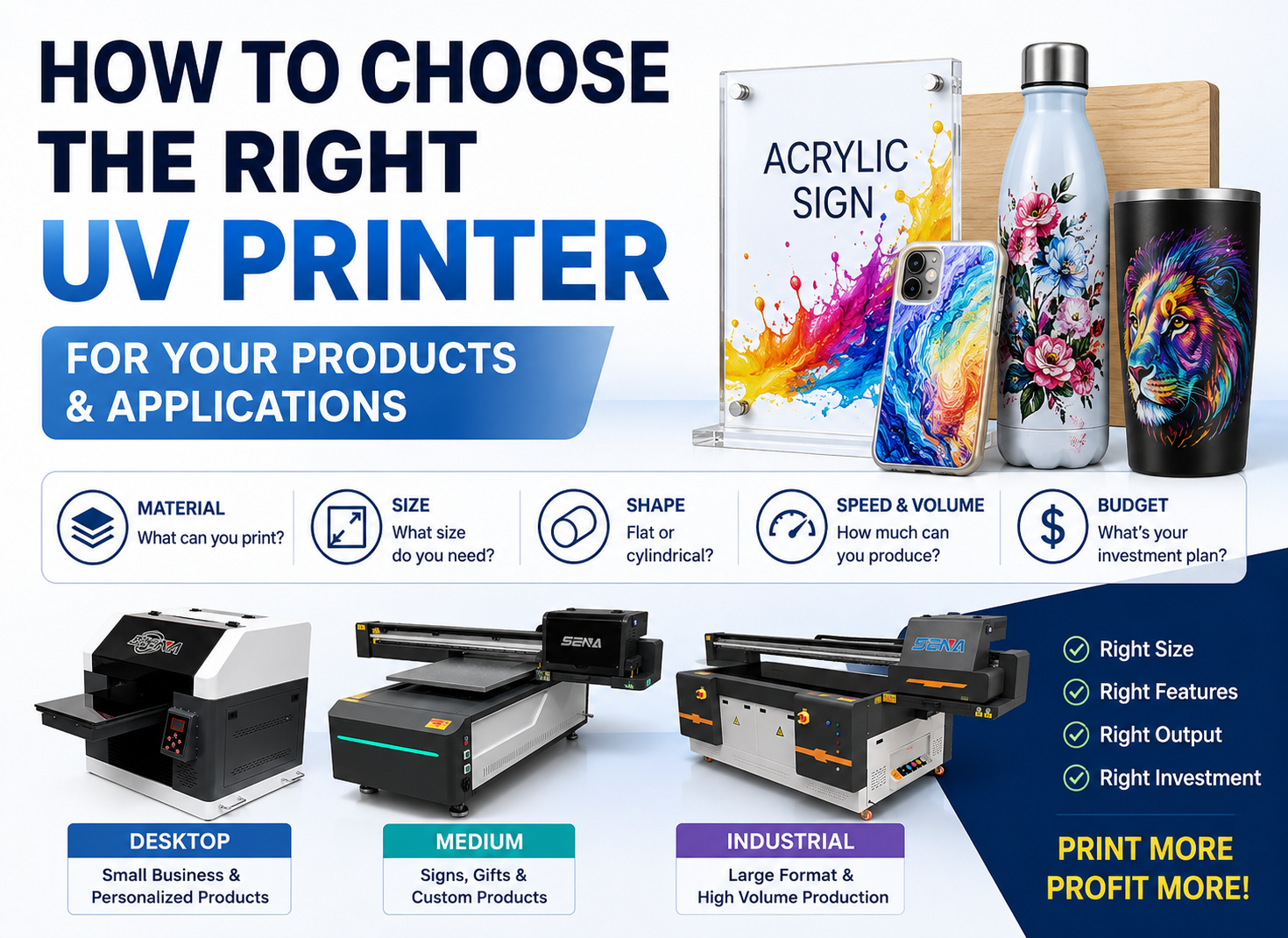
UV flatbed printer prices vary according to printing size, printhead brand, number of printheads, ink configuration, platform structure, maximum material height, production speed and automation level.
デスクトップUVフラットベッドプリンター
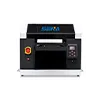
Desktop models are commonly used for promotional gifts, small signs, nameplates, phone accessories, personalized products and short-run customization. They generally require less space and a lower initial investment, but their smaller platform limits batch production and large-format work.
Medium-Format UV Flatbed Printers
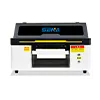
Medium-format printers are suitable for acrylic signs, wood panels, metal plates, packaging samples, decorative products and small-to-medium production runs. They often provide a balance between investment, printing area and production flexibility.
Industrial UV Flatbed Printers
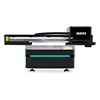
Industrial models are designed for large boards, glass, furniture panels, building materials, advertising displays and continuous production. Their purchase price is higher, but their larger platform and production capacity can reduce handling time and increase output when order volume is sufficient.
Optional Equipment and Accessories
Optional functions can increase the initial investment but may also expand the range of products a business can produce. Common options include:
- Rotary device for bottles and regular cylindrical products
- Additional printheads for higher speed or special ink channels
- White ink and varnish configurations
- Automatic height detection
- Extended printing height
- Vacuum adsorption platform
- Anti-static system
- Computer and RIP software
- Voltage stabilizer or transformer
- Initial ink, cleaning fluid and spare-parts package
Buyers should select options according to actual product requirements. Paying for unnecessary functions increases depreciation, while choosing a machine without essential functions can lead to expensive upgrades later.
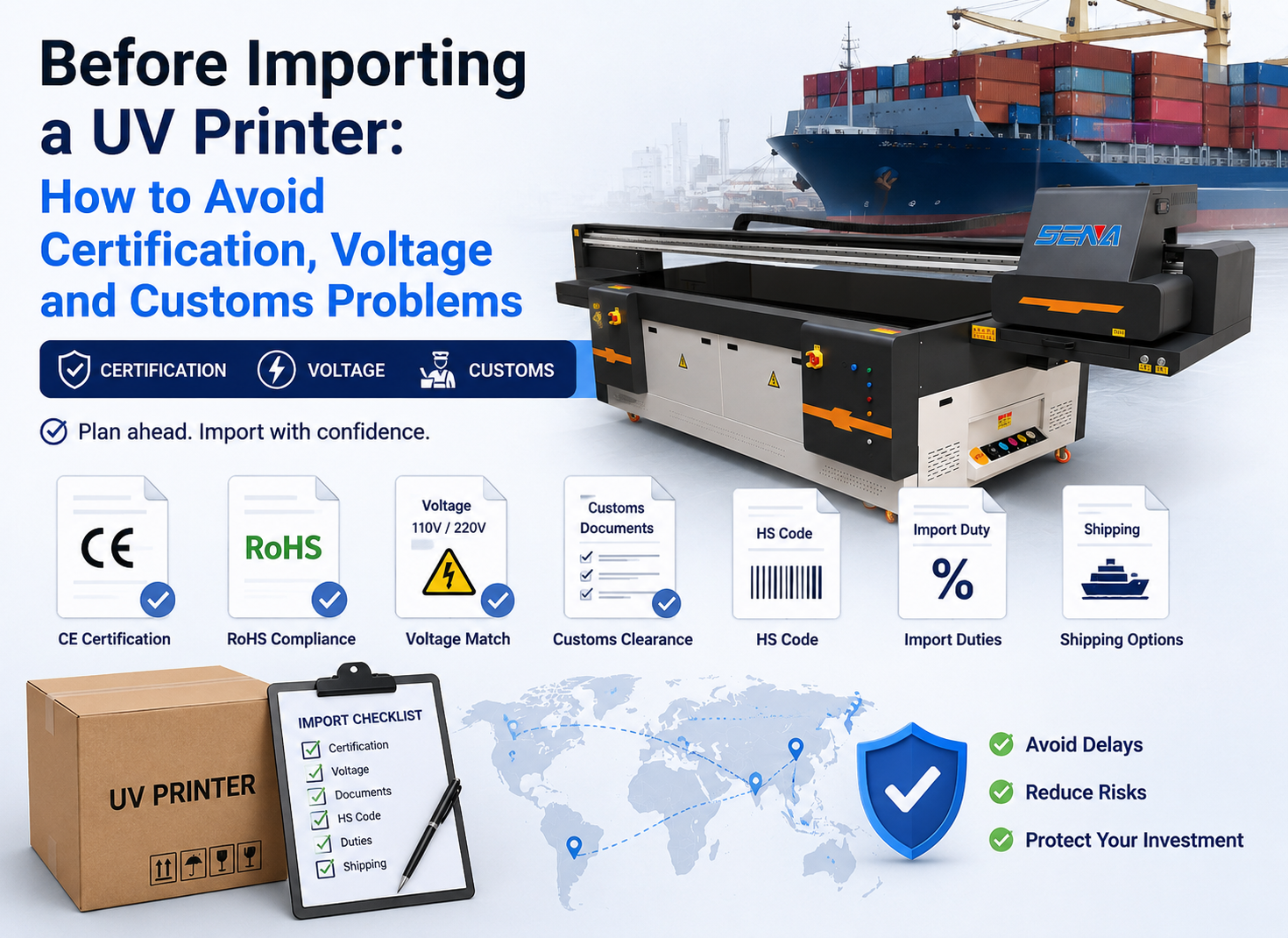
Shipping, Customs and Import Costs
Overseas buyers must include more than international freight in the initial cost calculation. The complete import budget may include:
- Export packaging
- Sea freight or air freight
- Marine insurance
- Import duties and taxes
- Customs clearance fees
- Port handling charges
- Inland delivery
- Forklift, crane or unloading services
Certification, voltage and customs requirements should be confirmed before the machine is shipped.
Read our related guide:
Before Importing a UV Printer: How to Avoid Certification, Voltage and Customs Problems
.
Installation, Training and Site Preparation
Installation costs depend on whether the machine can be installed remotely or requires an on-site technician. The buyer should confirm whether training, travel, accommodation and technical service are included in the quotation.
Power Supply
The workshop may require an independent electrical circuit, correct grounding, a voltage stabilizer or a transformer. Using an incorrect voltage may cause unstable operation or damage electrical components.
Ventilation and Working Environment
A clean, temperature-controlled and well-ventilated production area helps protect the ink system and printheads. Dust, extreme temperature and unstable humidity can increase nozzle problems, cleaning frequency and rejected prints.
Supporting Equipment
Depending on the machine configuration, supporting equipment may include an air compressor, extraction system, computer, worktable, material rack, humidity control equipment and handling tools.
UV Printer Operating Costs
Operating cost is the amount spent to keep the printer producing saleable work. It normally includes ink, cleaning fluid, electricity, routine consumables, labor and substrate waste.

UV Ink Cost per Square Meter
Ink is usually one of the largest variable costs. However, a single fixed ink consumption figure cannot represent every print job.
Ink Cost per m² = Ink Consumption per m² × Ink Price per Liter
A more complete calculation is:
Color Ink Cost + White Ink Cost + Varnish Cost + Cleaning and Purging Loss
Factors That Change Ink Consumption
Actual ink consumption depends on:
- Image coverage
- Number of printing passes
- Print resolution
- Color density
- Number of white ink layers
- Full or partial varnish coverage
- Embossed printing height
- Material color and transparency
- Automatic cleaning settings
- Manual purging and maintenance frequency
Why White Ink Costs More Than Expected
White ink is essential when printing on dark, transparent or colored materials. It may be used as an underbase, an overprint layer or part of a multi-layer printing process.
Because white ink contains heavier pigments, the circulation and agitation systems normally operate regularly to reduce settling. Automatic cleaning, nozzle checks and maintenance can also consume ink that does not become part of the final product.
Jobs using multiple white layers, varnish or embossed effects can use substantially more ink than a standard CMYK print.
For more information, read:
White Ink, Varnish and Embossed Effects in UV Printing: A Complete Guide
.
Ink Price Is Not the Same as Ink Cost
Cheap ink is not always economical. If an ink causes frequent nozzle cleaning, unstable color, poor adhesion, clogged filters or a higher rejection rate, the total production cost may be higher even when the price per liter is lower.
A useful ink evaluation should include print quality, adhesion, curing performance, cleaning frequency, nozzle condition and the percentage of saleable output.
UV Printer Electricity Consumption
Average Power Consumption × Operating Hours × Local Electricity Rate
Buyers should not calculate only the rated power of the printer. The complete electricity cost may include:
- UV LEDランプ
- Vacuum pump
- Negative pressure system
- White ink circulation system
- Air compressor
- Computer and monitor
- Ventilation system
- Workshop cooling or heating equipment
Actual consumption during production may differ from standby power. Ask the supplier for typical operating power under a representative printing configuration.
Routine Consumables
Small consumables may appear inexpensive individually, but their annual total should be included in the operating budget.
| Consumable | Main Function | 交換頻度 |
|---|---|---|
| Cleaning fluid | Ink system and printhead maintenance | Depends on workload and cleaning frequency |
| Wipers | Remove ink and debris from the printhead surface | Inspect regularly and replace when worn |
| Ink filters | Reduce contaminants in the ink path | According to supplier maintenance schedule |
| Dampers | Control ink delivery to the printhead | Replace when flow becomes unstable |
| Lint-free cloths | Safe cleaning of sensitive components | Continuous use |
| Primer or coating | Improve adhesion on selected materials | Depends on substrate and application |
Labor and Material Waste
Labor cost is often underestimated. UV printing involves more than the time required for the carriage to move across the platform.
Operator tasks may include:
- Checking and preparing customer files
- Creating print layouts
- Cleaning and positioning materials
- Setting printing height and vacuum zones
- Performing nozzle checks
- Loading and unloading products
- Inspecting print quality
- Cleaning the machine after production
Material waste should also be included. Common causes of rejected output include incorrect positioning, weak adhesion, missing nozzles, color differences, contaminated surfaces, incorrect files and physical damage during handling.
UV Printer Maintenance and Replacement Costs
Preventive Maintenance Costs
Preventive maintenance requires time and consumables, but it is normally less expensive than emergency repair and long production interruptions.
日常のメンテナンス
- Perform a nozzle check before production
- Inspect the wiper and capping station
- Clean ink residue around the printhead area
- Check the waste ink container
- Confirm that white ink circulation is functioning
- Keep the platform and encoder system clean
Weekly and Monthly Maintenance
- Inspect tubes, filters, dampers and ink connections
- Clean the linear guide according to supplier instructions
- Check the vacuum platform and pump
- Inspect electrical connections and sensors
- Review maintenance records and nozzle condition
The correct maintenance schedule depends on the printer structure, printhead type, ink system and production environment. Always follow the machine supplier’s instructions.
Printhead Replacement Cost
The printhead is one of the most important replacement-cost risks. However, the printhead price alone does not represent the complete cost of replacement.
Printhead Price + Technician Labor + Shipping + Calibration Ink + Lost Production Time
A printhead damaged during a busy production period may also cause delayed orders, overtime, urgent spare-parts freight and customer complaints.
Other Parts That May Need Replacement
Depending on the printer design and operating conditions, replacement parts may include:
- UV LEDランプ
- Ink pumps
- Negative pressure pumps
- Dampers and filters
- Capping station components
- Wipers
- Ink tubes
- Encoder strips or encoder sensors
- Vacuum pumps
- Height sensors
- Electrical boards
- Linear guide components
Software Licenses and Upgrades
Confirm whether the RIP software is included permanently or requires renewal. Additional costs may include software upgrades, color management tools, replacement computers, workflow software and new licenses for additional operators.
Five-Year UV Printer TCO Calculation Example
The following model shows how a business can calculate the five-year cost of an industrial UV flatbed printer with average monthly saleable output of 5,000 m².
These figures are illustrative and are not universal market prices. Actual costs depend on the printer configuration, print coverage, local wages, electricity rate, maintenance requirements and production efficiency.

Example Production Assumptions
| Item | Example Assumption |
|---|---|
| Ownership period | 5 years |
| Average monthly saleable output | 5,000 m² |
| Annual saleable output | 60,000 m² |
| Five-year saleable output | 300,000 m² |
| Machine and accessories | ¥300,000 |
| Shipping, installation and site preparation | ¥60,000 |
| Estimated residual value after five years | ¥30,000 |
Annual Depreciation Calculation
(Purchase and Setup Cost − Residual Value) ÷ Useful Life
Using the example figures:
Example Annual Operating Cost
| Cost Category | Annual Cost | Cost per m² |
|---|---|---|
| Depreciation | ¥66,000 | ¥1.10 |
| Ink and cleaning fluid | ¥450,000 | ¥7.50 |
| Electricity | ¥33,000 | ¥0.55 |
| Routine consumables | ¥60,000 | ¥1.00 |
| Direct labor | ¥144,000 | ¥2.40 |
| Waste and reprint allowance | ¥42,000 | ¥0.70 |
| Scheduled maintenance | ¥30,000 | ¥0.50 |
| Printhead and spare-parts reserve | ¥50,000 | ¥0.83 |
| Software and upgrades | ¥8,000 | ¥0.13 |
| Downtime allowance | ¥25,000 | ¥0.42 |
| Estimated annual total | ¥908,000 | ¥15.13 |
Under these assumptions, the estimated total production cost is approximately ¥15.13 per saleable square meter. This figure does not include the cost of the printed substrate, sales commission, packaging, rent, financing cost, tax or target profit margin.
Five-Year Cash TCO
| Cost Category | Five-Year Cost |
|---|---|
| Machine, accessories, shipping and setup | ¥360,000 |
| Ink and cleaning fluid | ¥2,250,000 |
| Electricity | ¥165,000 |
| Routine consumables | ¥300,000 |
| Direct labor | ¥720,000 |
| Waste and reprints | ¥210,000 |
| メンテナンス | ¥150,000 |
| Printheads and spare parts | ¥250,000 |
| Software and upgrades | ¥40,000 |
| Downtime allowance | ¥125,000 |
| Less estimated residual value | −¥30,000 |
| Estimated five-year TCO | ¥4,540,000 |
¥4,540,000 ÷ 300,000 m² = approximately ¥15.13 per m²
Depreciation is used in the annual cost table to allocate the initial investment across five years. In the five-year cash TCO table, the original purchase and setup payment is included directly. The two methods should not be added together, because that would count the equipment cost twice.
Utilization Sensitivity Analysis
Output volume strongly affects cost per square meter. The following simplified example assumes the same annual fixed cost of ¥179,000 but different production volumes.
| Utilization Scenario | Annual Saleable Output | Fixed Cost per m² |
|---|---|---|
| Low utilization | 24,000 m² | ¥7.46 |
| Expected utilization | 60,000 m² | ¥2.98 |
| High utilization | 90,000 m² | ¥1.99 |
This shows why production planning matters. A machine with a low purchase price can still have a high cost per square meter when it remains idle for much of the year.
How to Compare UV Printer Quotations Using TCO
Supplier quotations should be compared under the same production assumptions. Do not compare one supplier’s basic machine with another supplier’s complete production package.
Questions to Ask Every UV Printer Supplier
- What is included in the quoted machine price?
- Which printheads and how many printheads are included?
- Which RIP software and licenses are included?
- Is the initial ink and cleaning fluid included?
- What is the estimated ink consumption per square meter?
- How much ink is normally used during cleaning?
- Which routine consumables are required?
- What is the recommended annual maintenance budget?
- Which spare parts should be stocked locally?
- What is the typical operating power?
- Are installation and training included?
- How quickly can technical support respond?
- How long does international spare-parts delivery usually take?
- Which costs are specifically excluded from the quotation?
Compare Cost per Saleable Square Meter
The most useful comparison is:
Annual Fixed Cost ÷ Annual Saleable Output
+ Variable Cost per m²
Use the same monthly production volume, image coverage, white ink configuration, labor rate, electricity price and maintenance assumptions for every quotation.
Four Practical Ways to Reduce UV Printer TCO

1. Choose the Right Printer Size and Capacity
A machine that is too small may require frequent repositioning, repeated loading and inefficient layouts. A machine that is too large may create unnecessary depreciation and remain underused.
Match the printer to the largest regular product size, expected monthly volume, required print effects and future business plan.
Read:
How to Choose the Right UV Printer for Your Products and Applications
.
2. Control White Ink, Varnish and Cleaning Waste
Use product-specific printing presets instead of applying the same ink volume to every job. Reduce unnecessary white ink layers, limit varnish to required areas and avoid excessive manual purging.
A small reduction in ink waste can create a significant annual saving when monthly production is high.
3. Use Preventive Maintenance Instead of Emergency Repairs
Create a daily and weekly maintenance checklist. Record nozzle condition, cleaning frequency, filter changes and warning signs. Replace low-cost consumables before they cause expensive printhead or ink-system damage.
4. Evaluate Supplier Support as Part of the Machine Cost
Technical response speed, spare-parts availability, installation guidance and operator training all affect TCO. A supplier who can diagnose a problem quickly may reduce downtime even when the machine purchase price is not the lowest.
よくある質問
How much does it cost to run a UV printer?
The operating cost depends on machine size, ink configuration, image coverage, white ink use, labor, electricity, maintenance and waste. Calculate each cost separately and divide the annual total by annual saleable output.
How do I calculate UV printer ink cost per square meter?
Multiply the ink used per square meter by the price per liter. Add white ink, varnish and cleaning losses. Use actual test-print data whenever possible instead of relying only on theoretical coverage.
How many years should a UV printer be depreciated?
This example uses five years. The correct depreciation period depends on the company’s accounting policy, production intensity, expected useful life and local tax regulations.
Does white ink significantly increase UV printing costs?
It can. Dark and transparent materials may require one or more white ink layers. White ink circulation, cleaning and embossed printing can further increase consumption.
What is the most expensive UV printer maintenance item?
Printheads are often one of the most expensive individual replacement parts. However, extended downtime, rejected orders and customer loss may cost more than the replacement part itself.
Is a cheaper UV printer always less expensive?
No. A lower purchase price can be offset by higher ink consumption, more frequent maintenance, unstable output, expensive parts or slow technical support.
How can I calculate UV printer cost per square foot?
One square meter equals approximately 10.764 square feet. Divide the cost per square meter by 10.764 to estimate the cost per square foot.
What information should I request before buying a UV printer?
Request a detailed configuration list, ink consumption test, power specification, maintenance schedule, spare-parts list, software information, warranty terms, technical support process and a sample print using your own material.
Conclusion: Calculate Cost Before Comparing Price
The purchase price is only the starting point of UV printer ownership. Ink consumption, white ink management, maintenance, production efficiency, rejected prints, spare-parts availability and downtime determine the actual long-term cost.
Before selecting a machine, calculate the five-year TCO and the cost per saleable square meter. Compare different suppliers under the same production assumptions instead of selecting the lowest quotation automatically.
A reliable UV printer should not only produce acceptable samples during a demonstration. It should support stable production, predictable maintenance and profitable order delivery over several years.
Need a UV Printer Cost Estimate for Your Business?
Send us your product size, printing material, expected monthly output and required effects. Our team can help you evaluate the suitable UV printer configuration and estimate the operating cost for your application.