Korean
  English
  Arabic
  German
  French
  Spanish
  Turkish
  Italian
  Russian
  Persian
  Bengali
  Hebrew
  Persian (Afghanistan)
  Scottish Gaelic
  Panjabi
  Croatian
  Slovenian
  Greek
Greek  Afrikaans
  Czech
Czech  Japanese
  Portuguese





문의 사항이 지연되는 것을 방지하려면 WhatsApp/WeChat/Skype를 메시지와 함께 입력해 주세요. 그러면 곧바로 연락을 드릴 수 있습니다.
24시간 이내에 회신해 드리겠습니다. 긴급한 경우 WhatsApp을 추가하세요: +8613011708220, or WeChat: +86 13011708220. Or call +86 13011708220 곧장.
*저희는 귀하의 기밀을 존중하며 모든 정보는 보호됩니다. 저희는 귀하의 정보를 귀하의 문의에 답변하는 데만 사용하며, 요청하지 않은 이메일이나 홍보 메시지를 보내지 않습니다.
Many buyers experience the same frustration when purchasing a UV printer.
The sample looks perfect — sharp details, vibrant colors, smooth gradients, and excellent surface finish.
But after the machine arrives, the actual printing quality often becomes very different:
So why does this happen?
In this article, we will explain the real reasons why UV printing quality changes between samples and real production — and how buyers can avoid costly mistakes before purchasing a UV printer.

Many people believe print quality depends only on the printer itself.
In reality, UV printing quality is influenced by multiple technical factors, including:
Even if two machines use the same printhead, the final printing results can still look completely different.
Different materials require different ICC color profiles.
For example:
Many low-cost suppliers use default settings instead of professional ICC calibration, which often causes serious color inconsistency during production.
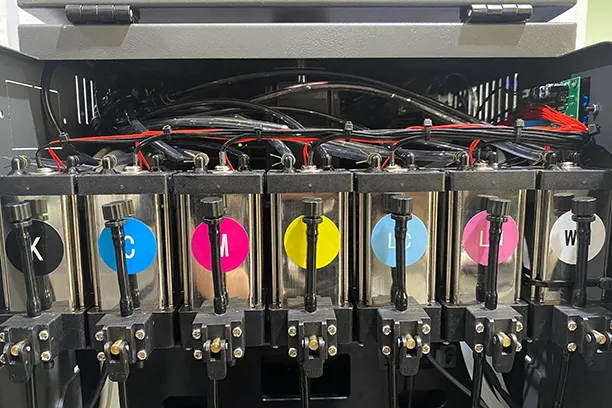
Printhead tuning directly affects:
Improper waveform settings can cause blurry edges, ink overspray, and poor image detail.
Low-quality UV ink often causes:
Stable ink performance is especially important for long-term batch production.
The same printer can produce very different results on different materials.
| 재료 | Common Printing Issue |
|---|---|
| 유리 | Color shift and poor adhesion |
| 아크릴 | Static electricity affecting ink placement |
| 목재 | Ink absorption inconsistency |
| 금속 | Reflection affecting color appearance |
Professional surface treatment and coating processes are essential for stable printing quality.
Many buyers underestimate the importance of RIP software configuration.
In reality, experienced operators can significantly improve:
A good machine without proper operation settings can still produce poor results.
This is one of the biggest reasons buyers feel disappointed after receiving a machine.
Many factory samples are printed using:
However, real production environments prioritize speed, efficiency, and continuous operation.
That is why actual production quality may look different from sample demonstrations.
Professional buyers should not focus only on a single beautiful sample.
The real question is:
Long-term stability is the true test of a professional UV printer.
One customer reported that small text printed perfectly during sample testing, but became blurry during mass production.
After inspection, the problem was caused by:
After adjusting the RIP settings and improving material grounding, the printing quality became stable again.

Before purchasing a UV printer, buyers should ask suppliers the following questions:
These questions help buyers evaluate the true production capability of a UV printer supplier.
A good-looking UV printing sample is easy.
Consistent real-world production quality is much more difficult.
Before investing in a UV printer, buyers should focus not only on image quality, but also on:
Understanding these factors can help businesses avoid expensive purchasing mistakes and achieve better long-term printing performance.
We can help evaluate your actual materials, production requirements, and printing quality expectations before purchase.