

 Portuguese
  English
  Arabic
  German
  French
  Spanish
  Turkish
  Italian
  Russian
  Persian
  Bengali
  Hebrew
  Persian (Afghanistan)
  Scottish Gaelic
  Panjabi
  Croatian
  Slovenian
  Greek
Greek  Afrikaans
  Czech
Czech  Korean
  Japanese






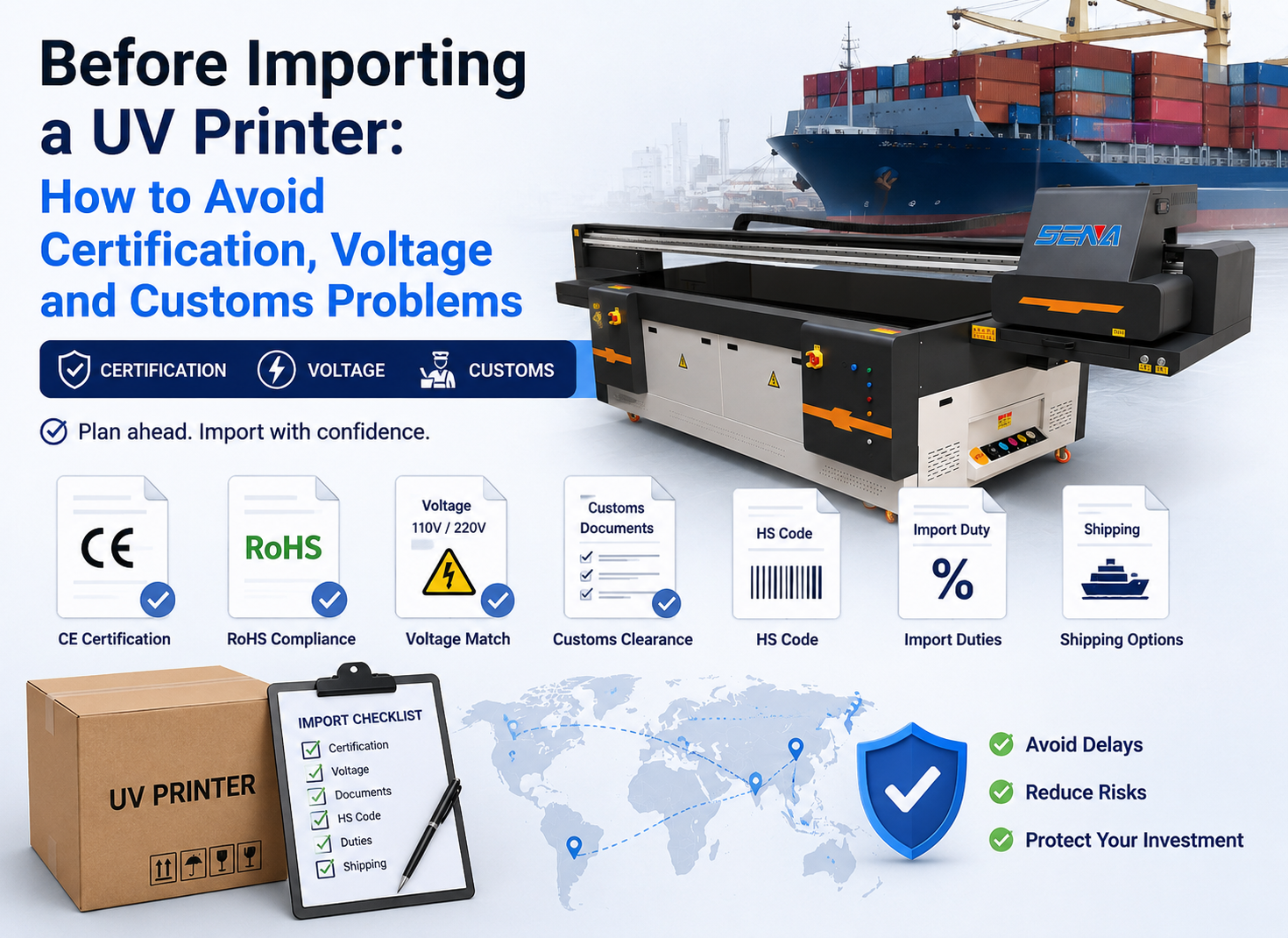
Buying a UV printer can create new business opportunities, but it also requires a significant investment. Before placing an order, many buyers ask the same questions:
- How long will it take to recover the investment?
- Can the machine generate stable profits?
- What happens if the order volume is lower than expected?
The return on investment of a UV printer cannot be calculated from the machine price alone. Buyers must also consider shipping, installation, ink, labor, maintenance, market demand and possible production downtime.
A realistic UV printer ROI calculation can help buyers understand the risks before purchasing and build a more reliable business plan.
1. Calculate the Total Initial Investment
The first step is to calculate the complete startup cost.
Many buyers focus only on the UV printer quotation, but the final investment may also include:
- Machine price
- Export packaging
- International shipping
- Customs duties and taxes
- Local transportation
- Installation and training
- Computer and RIP software
- Voltage stabilizer
- Air compressor or exhaust system
- Initial ink and cleaning solution
- Spare parts
- Workshop preparation
For example, a printer may have an attractive machine price, but shipping, import taxes and additional equipment can significantly increase the total landed cost.
Before calculating the payback period, ask the supplier for a complete quotation and confirm which items are included.

2. Estimate Realistic Monthly Sales
The next step is to estimate how much revenue the UV printer can realistically generate each month.
Do not calculate income based only on the machine’s maximum printing speed. Actual production capacity is affected by file preparation, material loading, printing mode, curing, finishing, maintenance and operator experience.
Buyers should evaluate:
- Expected monthly order volume
- Average order value
- Average selling price per product
- Number of working days per month
- Realistic daily production time
- Machine utilization rate
- Seasonal changes in demand
- Existing customer resources
A new business should normally use conservative sales estimates. It is risky to assume that the machine will operate at full capacity immediately after installation.
It may take time to develop customers, test materials and identify the most profitable products.
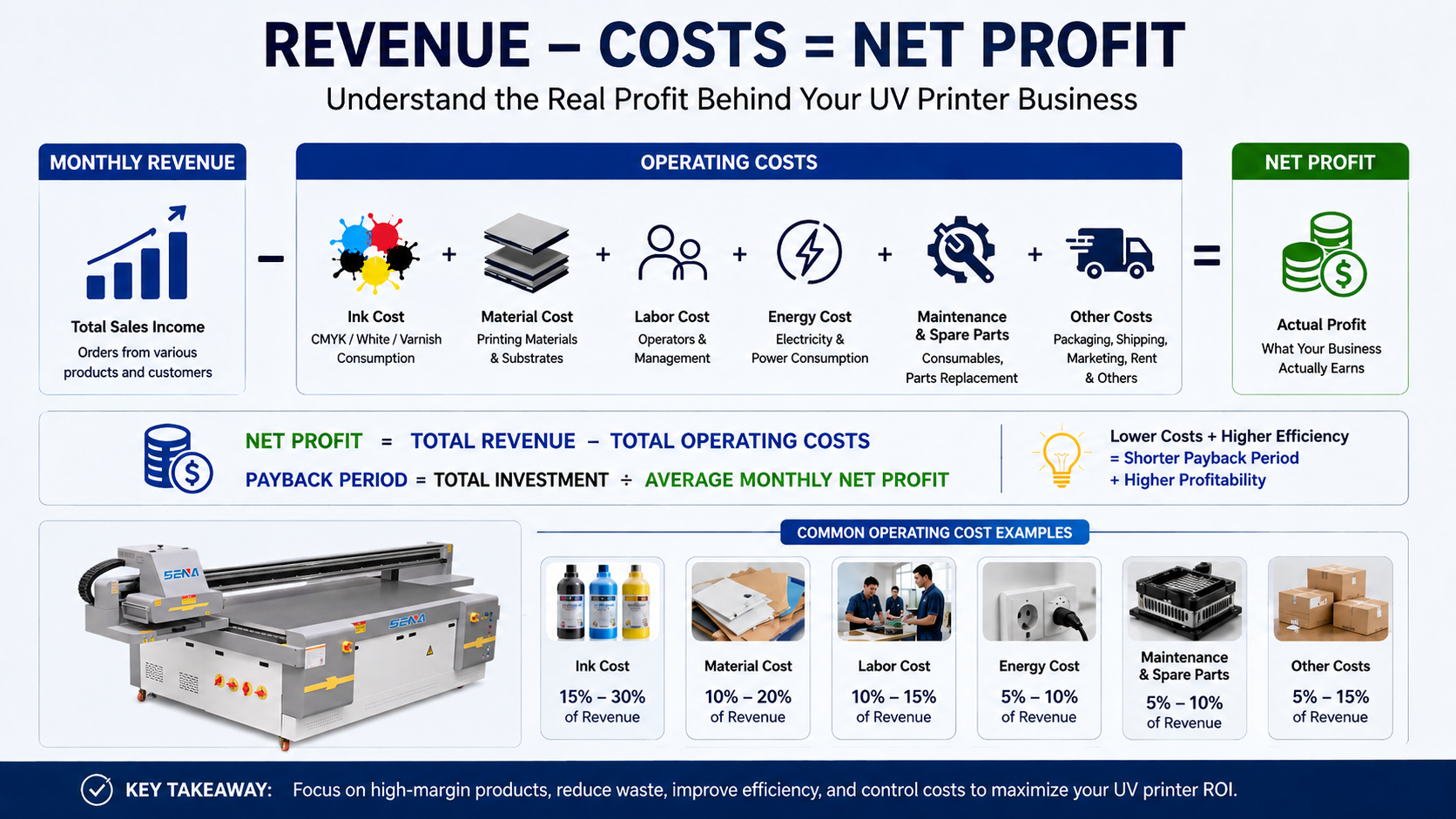
3. Understand the Real Operating Costs
Sales revenue is not the same as net profit.
To calculate the true return on investment, buyers must deduct all operating expenses from monthly sales.
Common UV printer operating costs include:
- CMYK UV ink
- White ink and varnish
- Cleaning solution
- Ink filters, dampers and wipers
- Printhead replacement
- Electricity
- Operator salary
- Printing materials
- Failed prints and material waste
- Embalagem do produto
- Delivery costs
- Marketing and customer acquisition
- Routine maintenance
White ink printing, varnish effects and high-quality printing modes may increase ink consumption and production time.
Material waste should also be included in the calculation. During the early stage, operators may need to test printing parameters, color profiles, adhesion and surface treatment. These tests create additional costs that are often ignored in simple profit estimates.
4. Consider Training and the Learning Period
Even an easy-to-operate UV printer requires training and practice.
Operators need to learn:
- RIP software operation
- File preparation
- Gerenciamento de cores
- Print height adjustment
- White ink settings
- Material positioning
- Nozzle inspection
- Daily cleaning
- Basic troubleshooting
During the learning period, production efficiency may be lower and the number of failed prints may be higher.
A professional supplier should provide operation manuals, training videos, remote guidance and troubleshooting support. Good training can shorten the learning period and help the buyer start production more quickly.
However, buyers should still include a reasonable learning and testing period in their investment plan.
5. Include Maintenance and Downtime Risks
Machine stability has a direct impact on ROI da impressora UV.
If the printer stops working, the business may face delayed deliveries, cancelled orders, customer complaints and lost revenue.
Possible causes of downtime include:
- Printhead blockage
- Ink system problems
- Sensor failure
- Software or communication errors
- Electrical problems
- Incorrect operation
- Delayed spare parts delivery
Before purchasing, buyers should ask about the price and availability of printheads, filters, dampers, sensors, wipers and other common spare parts.
Buyers should also confirm:
- Technical support response time
- Available communication channels
- Remote diagnosis capability
- Spare parts delivery time
- Warranty terms
- Availability of operation and maintenance guidance
A reliable machine and responsive technical support can reduce downtime and protect long-term profitability.
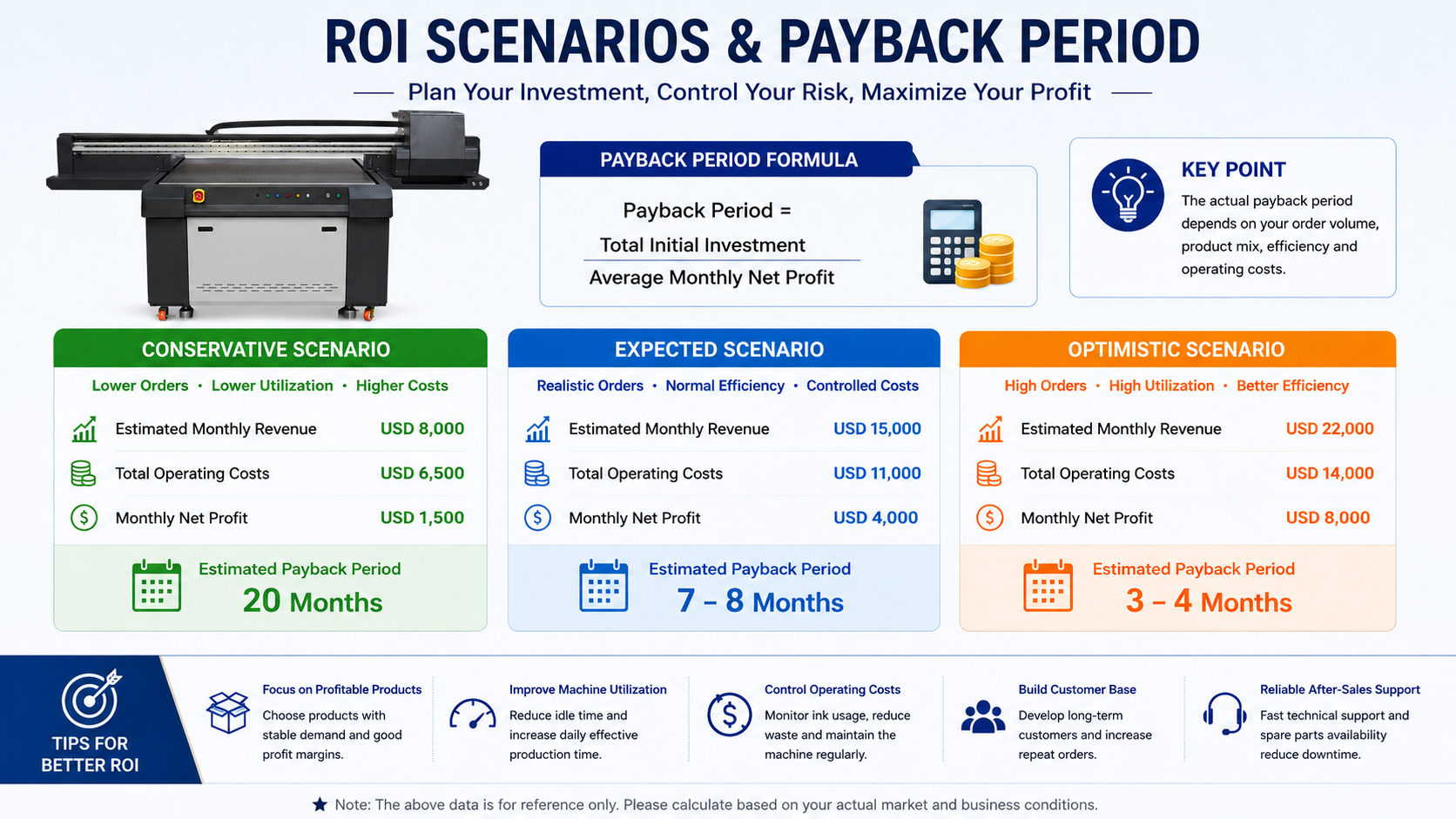
6. Use Three Scenarios to Calculate Payback
Instead of making only one profit estimate, buyers should prepare three different scenarios.
Conservative Scenario
This scenario assumes lower order volume, lower machine utilization and higher testing or maintenance costs.
It shows whether the business can continue operating even when sales grow slowly.
Expected Scenario
This scenario is based on current customer resources, realistic market demand and normal production efficiency.
It should be the main reference for investment planning.
Optimistic Scenario
This scenario assumes strong order growth, higher production efficiency and better machine utilization.
It can show the potential upside of the investment, but it should not be the only basis for purchasing decisions.
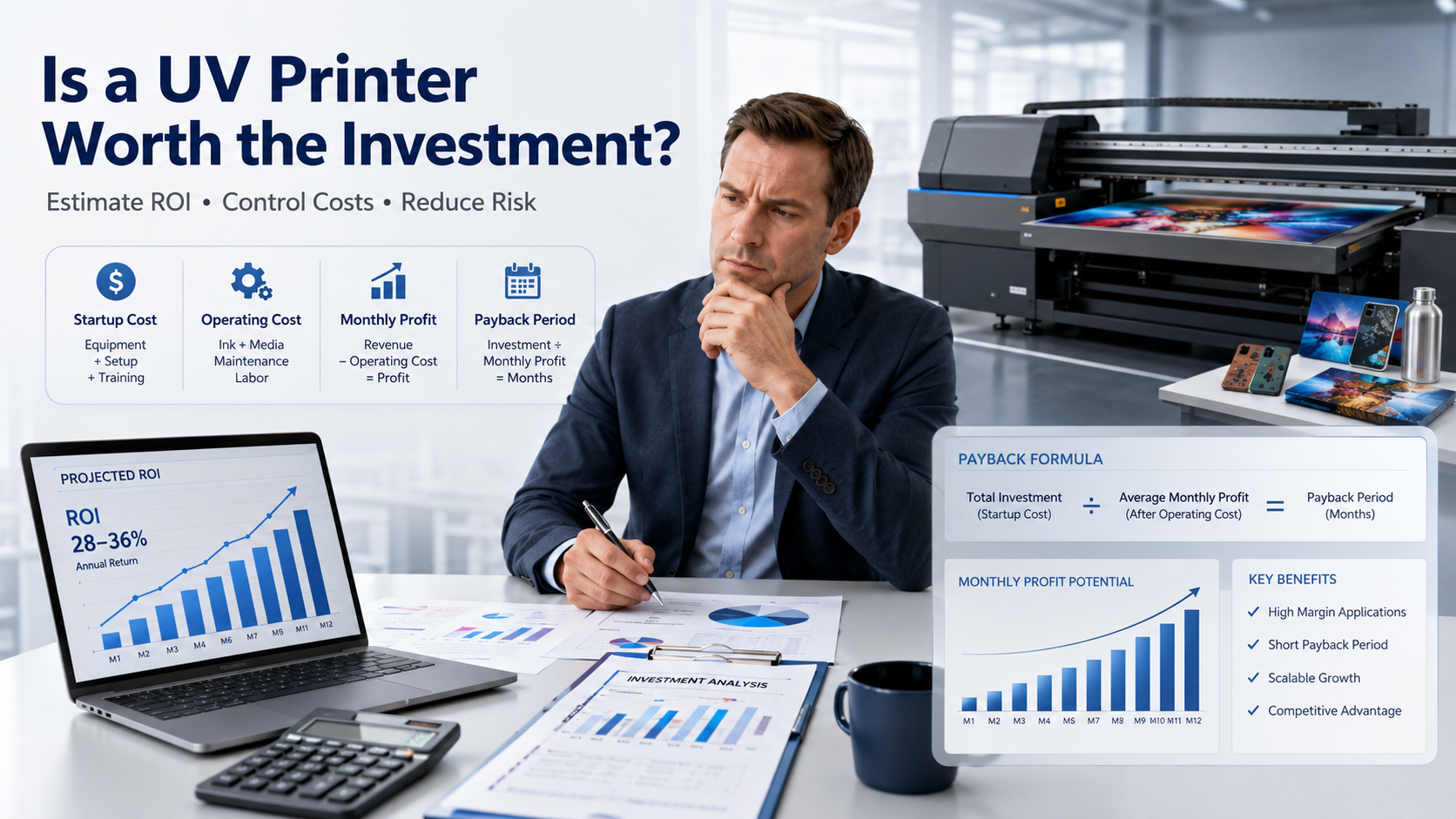
Payback Period Formula:
Payback Period = Total Initial Investment ÷ Average Monthly Net Profit
For example, if the total investment is USD 30,000 and the average monthly net profit is USD 3,000, the estimated payback period is approximately 10 months.
However, if the monthly net profit falls to USD 1,500, the payback period becomes approximately 20 months.
This is why buyers should use realistic and conservative data instead of relying only on ideal production conditions.
7. Evaluate Product Profitability
The profitability of a UV printer also depends on what products the business plans to sell.
UV printers can be used for applications such as:
- Customized signs
- Acrylic products
- Metal nameplates
- Promotional gifts
- Capas de telefone
- Wood panels
- Decorative glass
- Protótipos de embalagem
- Personalized products
- Marcação industrial
Some products may have high selling prices but low order volume. Others may have lower profit per piece but more stable repeat orders.
Before investing, buyers should research:
- Local market demand
- Competitor pricing
- Material costs
- Production time
- Required finishing processes
- Minimum order quantities
- Customer acquisition costs
The most profitable product is not always the product with the highest selling price. Stable orders, efficient production and repeat customers are also important.
8. Questions to Ask Before Investing
Before purchasing a UV printer, buyers should ask the supplier:
- What is the total landed and installation cost?
- Which accessories and software are included?
- What additional equipment is required?
- What is the realistic production speed?
- What is the average ink consumption?
- How much do printheads and common spare parts cost?
- What daily maintenance is required?
- How quickly does technical support respond?
- Can the supplier test the buyer’s actual materials?
- Are real printing videos and customer cases available?
Clear answers to these questions can help buyers build a more accurate cost and profit model.
Conclusion: Make Decisions Based on Realistic Data
A UV printer can be a profitable investment, but profitability depends on more than the machine price or maximum printing speed.
Order volume, product pricing, ink consumption, operator skills, maintenance costs, machine utilization and after-sales support all affect the final return on investment.
SENA helps customers evaluate machine configurations, application requirements, operating costs and production needs before purchasing. We also provide material testing, operation training, remote technical support and spare parts services.
Before investing, calculate the total startup cost, estimate sales conservatively and prepare for maintenance and downtime risks.
A realistic business plan will help you control risk, shorten the payback period and build a more sustainable UV printing business.