

 English
  Arabic
  German
  French
  Spanish
  Turkish
  Italian
  Russian
  Persian
  Bengali
  Hebrew
  Persian (Afghanistan)
  Scottish Gaelic
  Panjabi
  Croatian
  Slovenian
  Greek
Greek  Afrikaans
  Czech
Czech  Korean
  Japanese
  Portuguese





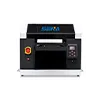
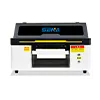
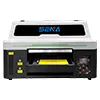
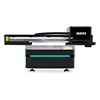
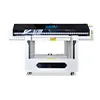
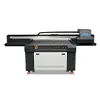
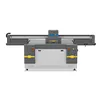
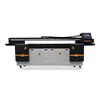
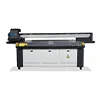
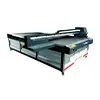
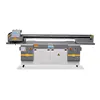
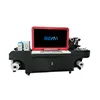
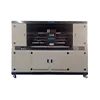
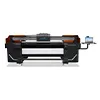
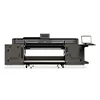

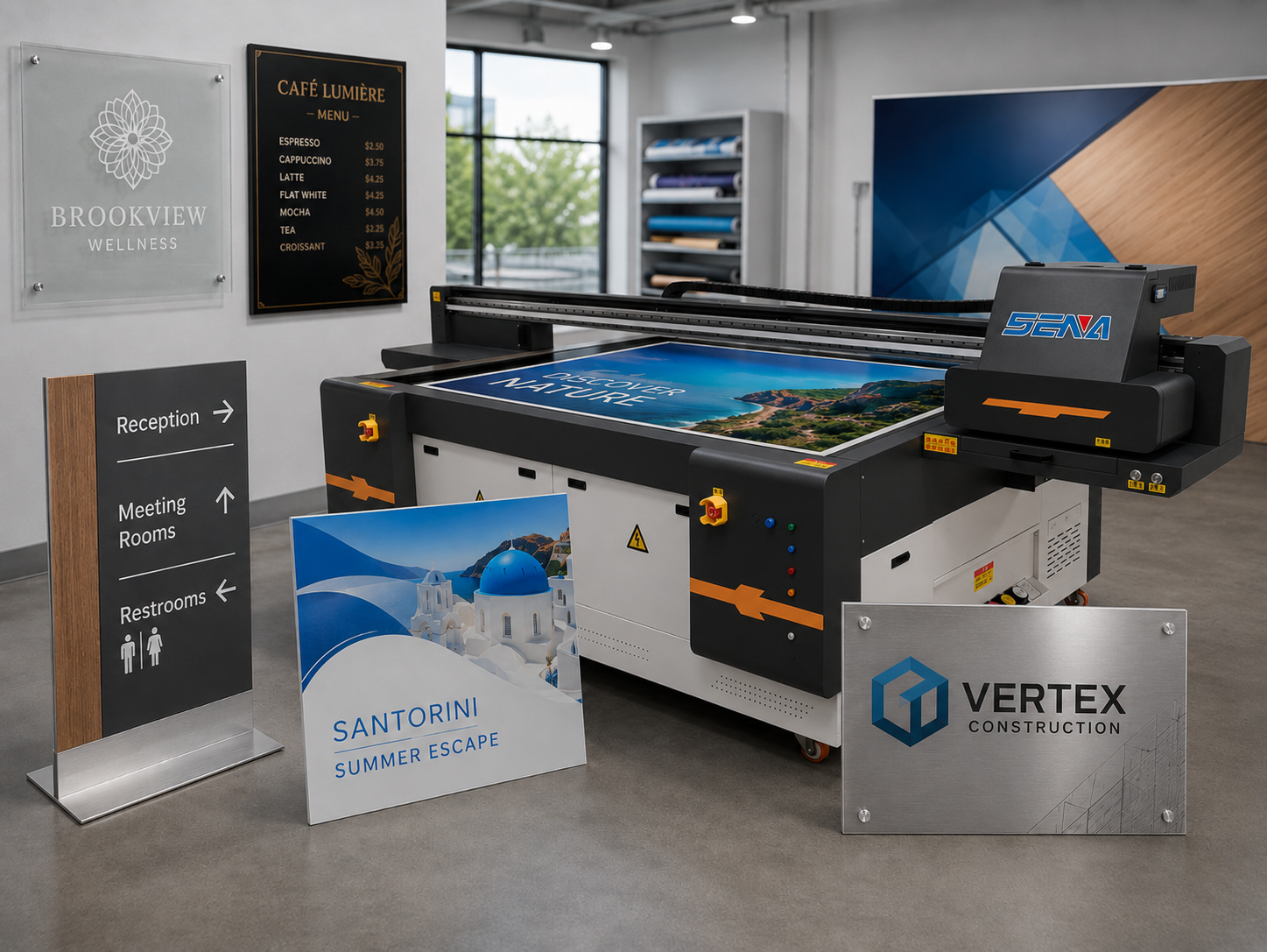
UV Printer for Signage: Materials, Applications and Production Benefits
A UV printer for signage allows advertising companies to print customized signs, display boards and promotional panels directly on acrylic, PVC, metal and many other rigid materials. Compared with traditional vinyl mounting or screen-printing processes, UV direct printing can reduce production steps, shorten delivery times and make small customized orders easier to handle.
With CMYK color, white ink and optional varnish, one UV flatbed printer can produce indoor signs, outdoor advertising boards, exhibition displays, retail panels, industrial nameplates and many other products.
This guide explains which sign materials can be printed, how to obtain stable print quality, how to choose between small and large-format machines, and whether UV sign printing is a suitable business opportunity for advertising companies.
What Is a UV Printer for Signage?
A UV printer deposits ink directly onto the surface of a material and uses ultraviolet lamps to cure the ink immediately. Because the ink dries during printing, the finished board can normally move directly to cutting, packing or installation.
A professional sign printing machine can print detailed images, logos, small text, QR codes, barcodes and decorative effects on flat materials. It can also print white ink underneath color graphics or apply varnish to selected areas.
Unlike a roll-to-roll printer, which mainly handles vinyl, banner and other flexible media, a UV flatbed printer can hold rigid sheets directly on its printing platform. This makes it suitable for:
- Advertising production companies
- Sign-making workshops
- Exhibition display manufacturers
- Retail display suppliers
- Interior decoration companies
- Industrial identification manufacturers
- Customized product businesses
A typical UV flatbed printer for advertising may include CMYK ink, white ink circulation, optional varnish, automatic height detection, a vacuum adsorption platform and RIP software for image processing.
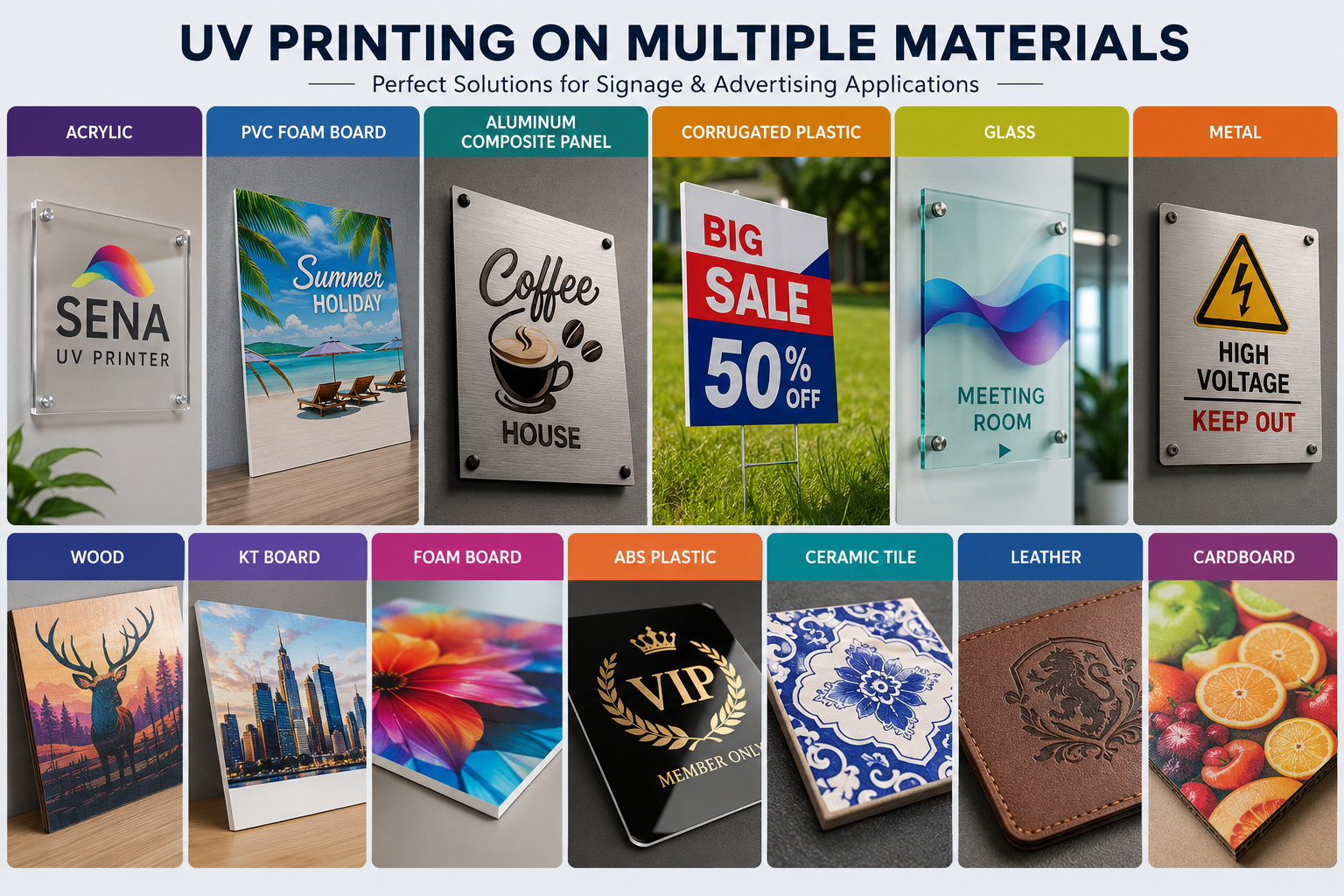
Which Sign Materials Can Be Printed?
Material flexibility is one of the main reasons advertising companies invest in UV printing. However, print quality and adhesion can vary according to the surface condition, coating and chemical composition of each material.
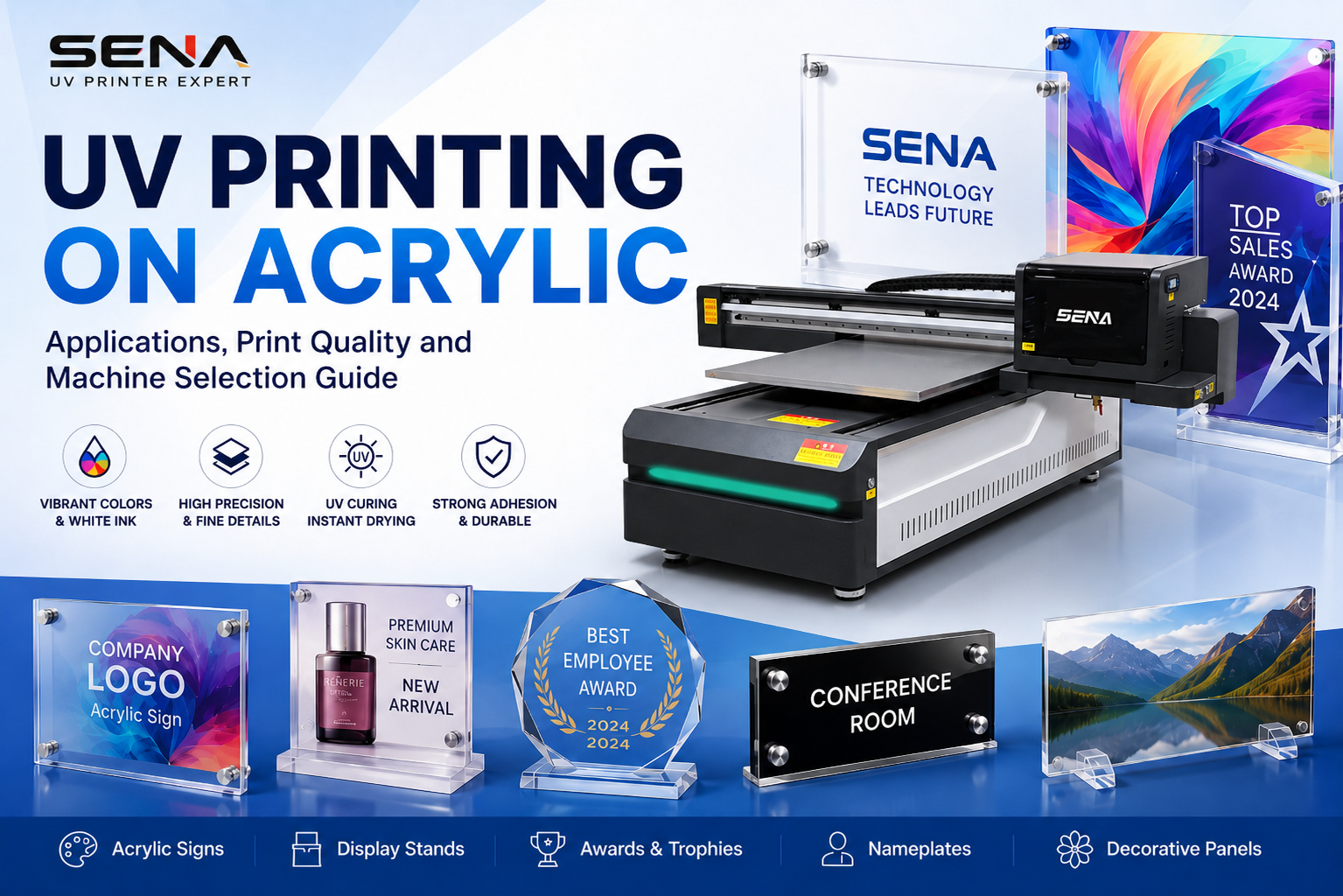
Acrylic Signs
Acrylic is widely used for company logos, reception signs, shop signs, door signs, illuminated displays, directional signs and premium retail panels.
A UV printer can print on clear, white, black and colored acrylic. White ink is especially important when printing transparent or dark acrylic because it creates an opaque background behind the color image.
Reverse printing is another common technique. The image is printed on the back of clear acrylic and viewed through the front. This gives the sign a smooth surface and helps protect the printed image from direct contact.
For more detailed information about acrylic preparation, white ink and reverse printing, read our
UV printing on acrylic guide
.
PVC and Foam Boards
PVC foam board is widely used for indoor advertising, menu panels, temporary displays, exhibition graphics and promotional signs. It is lightweight, easy to cut and available in different thicknesses.
Direct UV printing removes the need to print adhesive vinyl and manually mount it onto the board. This can reduce labor, avoid bubbles and improve production consistency.
Before printing, operators should remove protective film, dust, oil and static electricity from the surface. Because PVC boards from different suppliers may have different coatings, an adhesion test should be completed before batch production.
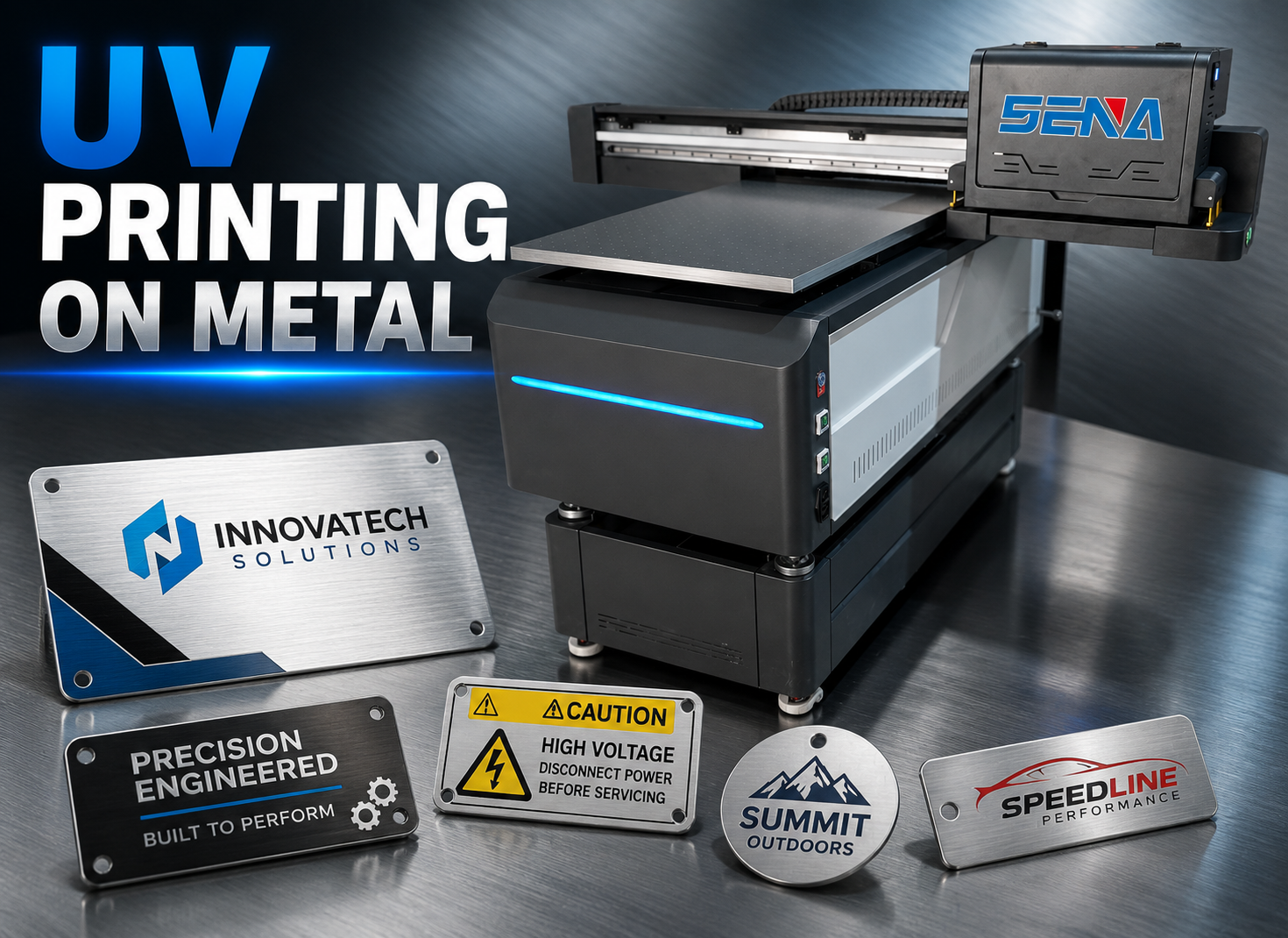
Metal and Aluminum Signs
Metal sheets and aluminum composite panels are commonly used for building signs, parking signs, industrial identification, safety information, equipment nameplates and outdoor advertising.
UV printing can reproduce small text, warning symbols, brand logos, QR codes and full-color graphics directly on coated metal surfaces. White ink can be used under the color layer when printing on dark or reflective metal.
Smooth, untreated or highly reflective metals may require primer. Buyers should test adhesion, scratch resistance and weather resistance on the actual material before confirming production specifications.
Learn more about material preparation and adhesion in our
UV printing on metal guide
.
Corrugated Plastic Boards
Corrugated plastic sheets are frequently used for real estate signs, event signs, promotional boards, construction information and temporary outdoor advertising.
A large-format UV printer can print multiple boards in one layout. This improves efficiency for repeat designs, regional advertising campaigns and batch production.
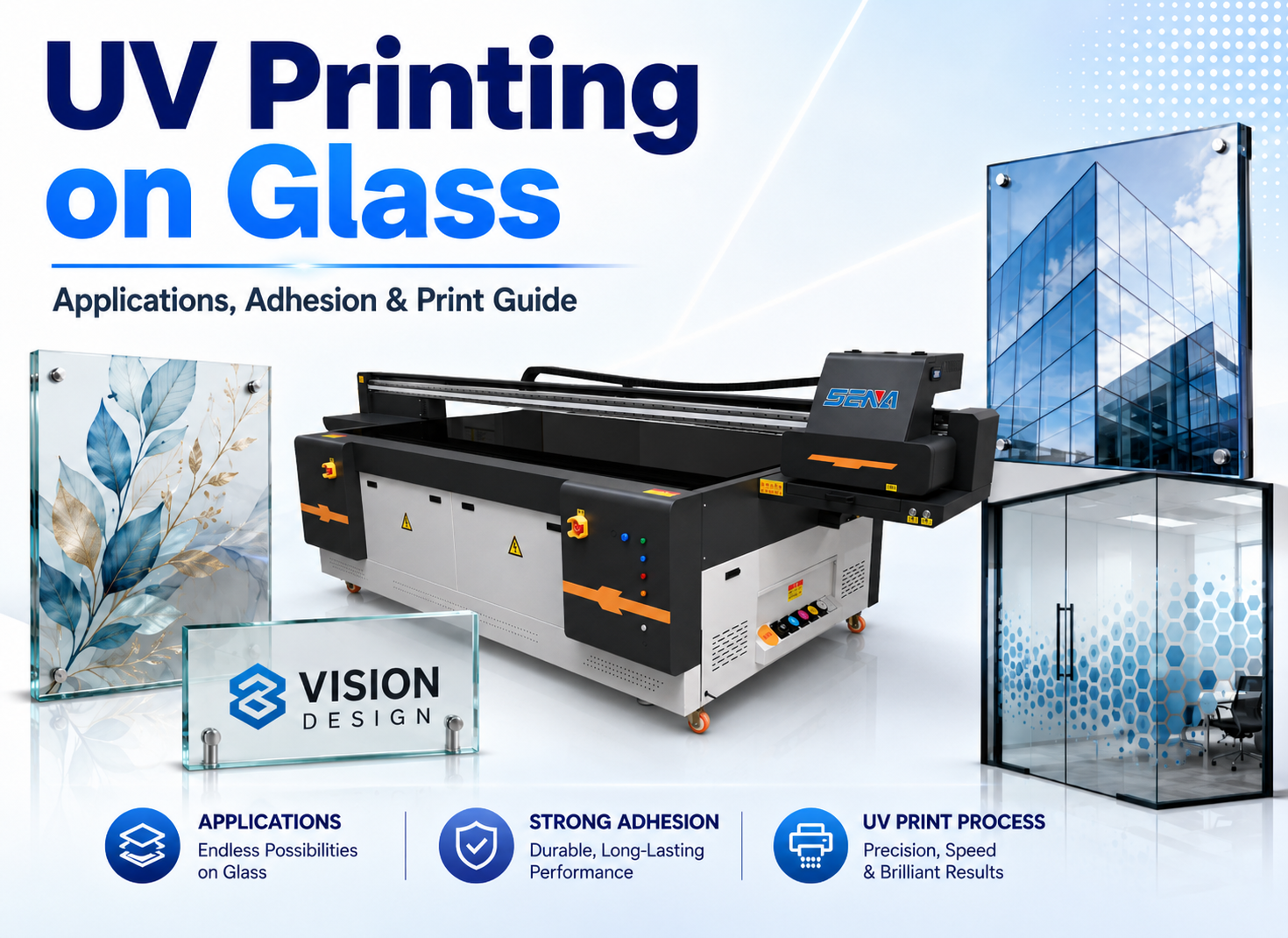
Glass Display Panels
Glass can be used for office signs, store displays, decorative panels, hotel signs and architectural identification. Transparent printing, white ink and reverse printing can produce premium visual effects.
Because glass is smooth and non-porous, it normally requires careful cleaning and may require primer to improve ink adhesion.
For more information, see our
UV printing on glass guide
.
Other Printable Display Materials
- KT boards
- Foam boards
- Wood and MDF panels
- ABS plastic sheets
- Cardboard display panels
- Composite decorative boards
- Coated ceramic tiles
- Leather display materials
Indoor and Outdoor Advertising Applications
A UV printer for signage can support both indoor and outdoor advertising production. However, the expected service life depends on the ink, material, surface treatment, installation environment and exposure to sunlight or moisture.
Indoor Sign Applications
- Reception and company logo signs
- Retail store displays
- Exhibition panels
- Menu boards
- Office door signs
- Directional signs
- Shopping mall promotional panels
- Point-of-sale displays
- Hotel room and facility signs
- Interior decorative panels
Indoor sign customers usually focus on clear text, accurate colors, smooth gradients and attractive finishing. White ink and selective varnish can improve visual value without requiring complicated post-processing.
Outdoor Sign Applications
- Building identification signs
- Shopfront advertising panels
- Parking signs
- Real estate advertising boards
- Construction site signs
- Outdoor directional signs
- Industrial warning signs
- Event and campaign boards
Outdoor production requires more testing than indoor production. Sign manufacturers should consider sunlight, rain, temperature changes, corrosion, cleaning chemicals and physical abrasion.
Depending on the required service life, the finished sign may need lamination, clear coating or additional protection. Local building, electrical and installation requirements should also be reviewed before outdoor signs are installed.
Companies serving international sign markets can also refer to resources from the
International Sign Association
for general industry information and professional education.
How White Ink, Color and Varnish Improve Sign Value
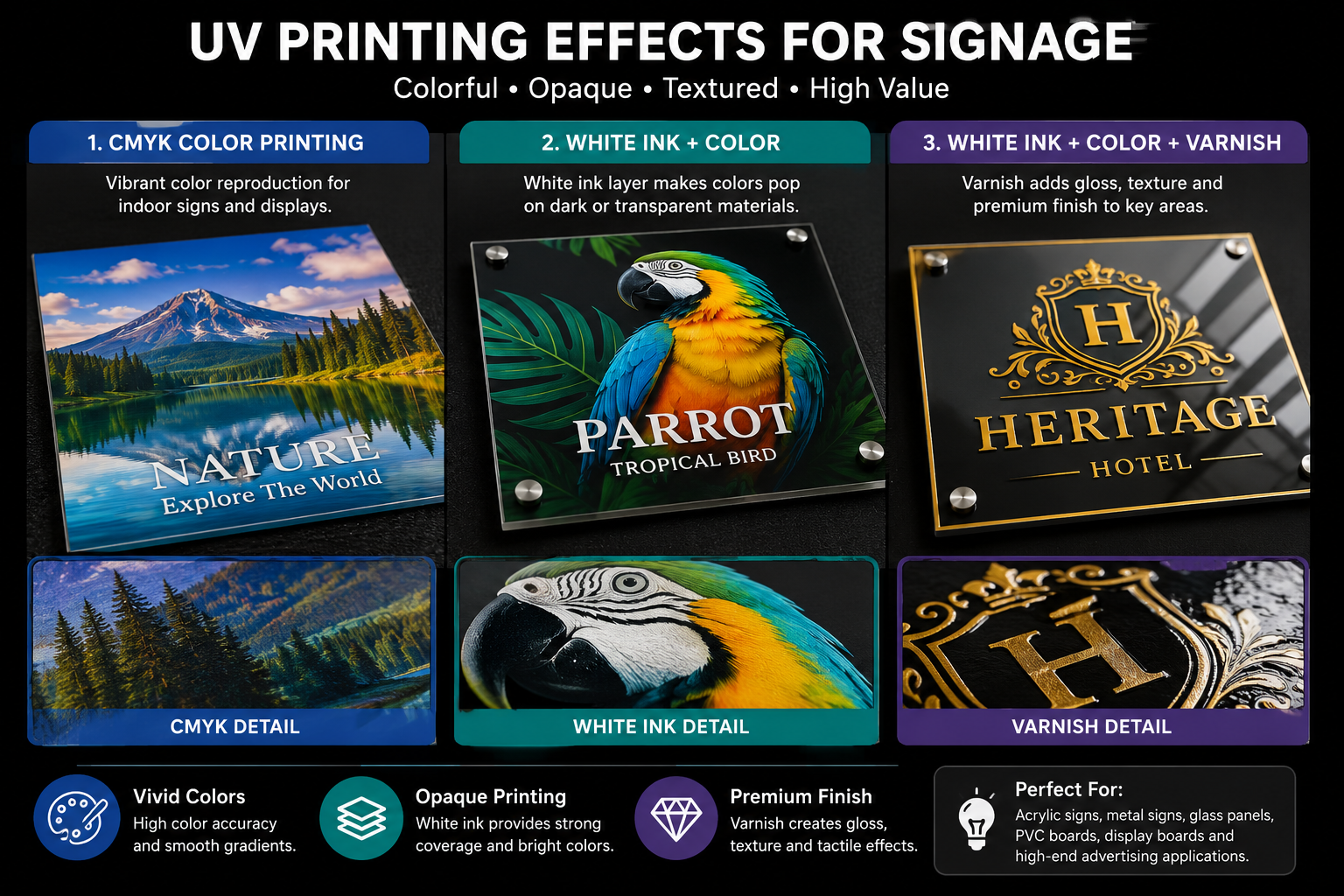
CMYK Full-Color Printing
CMYK ink is used to print photographs, logos, gradients, illustrations, brand colors and advertising graphics. For most sign applications, consistent color and clear text are more important than extremely high photographic resolution.
Stable color output depends on suitable printing profiles, correct RIP settings, nozzle condition and material consistency.
White Ink Printing
White ink makes it possible to print on transparent, dark and colored materials. It is often used for:
- Transparent acrylic signs
- Glass display panels
- Black PVC boards
- Dark metal sheets
- Colored advertising panels
- Selective transparent designs
Common white ink printing modes include:
- White plus color: white is printed first, followed by the color image.
- Color plus white: color is printed first, with white behind it for reverse viewing.
- Color-white-color: used for double-sided viewing on transparent materials.
- Selective white: white is printed only in specific areas of the design.
White ink contains heavier pigments than CMYK ink. A reliable circulation and stirring system helps reduce sedimentation and maintain more stable output.
Varnish and Raised Effects
Optional varnish can be printed over selected areas to create gloss contrast, highlight logos or improve the premium appearance of a display.
Multiple varnish layers can produce a slightly raised texture. These effects are suitable for luxury retail signs, decorative panels, product displays and customized branding projects.
How to Achieve Stable UV Sign Printing Results
A UV printer can handle many materials, but stable production requires correct preparation, suitable printing parameters and regular maintenance.
1. Clean the Material Surface
Dust, oil, moisture, fingerprints and protective-film residue can reduce ink adhesion. Clean the printable surface before loading the material and avoid touching it after cleaning.
2. Test Whether Primer Is Required
Primer is not required for every material. However, some acrylic, metal, glass and plastic surfaces may need a suitable coating to improve adhesion.
Do not assume that one primer can be used on every substrate. Test the actual material supplied by the customer before batch production.
3. Keep the Material Flat
Warped or uneven boards can affect print quality and may contact the printhead. A vacuum adsorption platform helps secure lightweight or large boards during printing.
4. Set the Correct Printhead Height
Excessive distance between the printhead and material can cause ink mist, blurred edges and inaccurate image placement. The printing distance should remain within the machine manufacturer’s recommended range.
5. Select the Correct Printing Mode
CMYK-only printing is normally faster than color-plus-white or color-white-varnish production. Production planning should be based on the actual ink configuration required by the order.
6. Complete Daily Maintenance
Daily nozzle checks, printhead cleaning, white ink circulation and platform cleaning help maintain stable quality. Long periods without printing should be avoided, especially when the machine uses white ink.
7. Test Finished Product Durability
Before mass production, test adhesion, scratch resistance, color appearance and outdoor durability. The sample should use the same material, ink layers and finishing process planned for the final order.
How to Choose a UV Printer for Signage
Choosing the correct printing size is one of the most important investment decisions. A larger machine is not automatically the best choice for every advertising company.
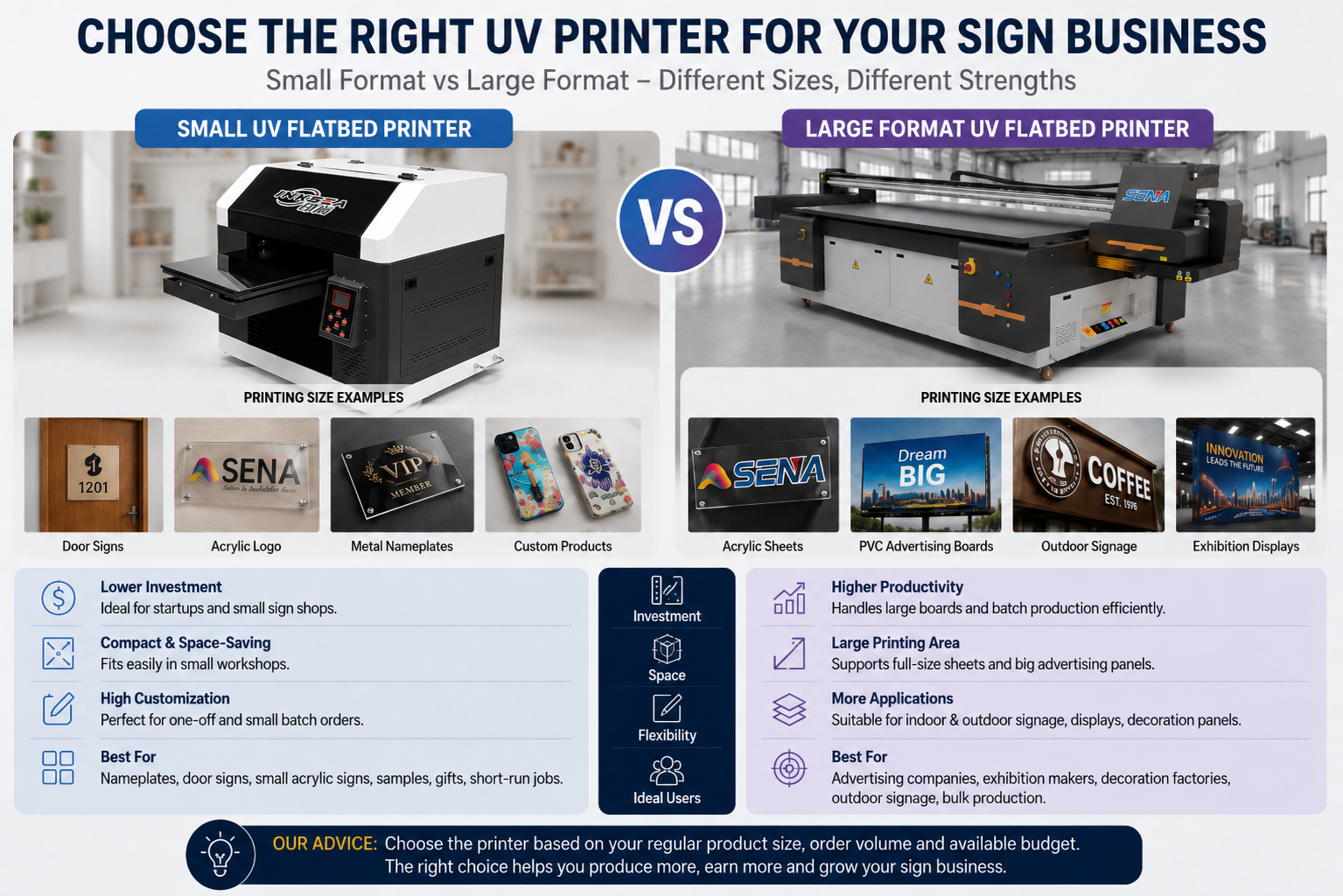
Small UV Flatbed Printers
Small-format UV printers are suitable for:
- Door signs
- Desk signs
- Small acrylic logo panels
- Metal nameplates
- Safety labels
- Customized promotional products
- Samples and prototypes
Their advantages include a lower initial investment, smaller installation space and flexibility for short-run orders. They are suitable for new businesses, small sign shops and companies testing a new product market.
Medium-Format UV Flatbed Printers
Medium-format machines provide a balance between installation space, production capacity and application range. They can handle larger acrylic signs, advertising panels and multiple small products in one layout.
This type of machine is suitable for advertising companies that already have regular orders but do not frequently print complete industrial-size sheets.
Large-Format UV Flatbed Printers
Large-format machines are suitable for:
- Full-size acrylic and PVC sheets
- Large advertising panels
- Exhibition display boards
- Architectural decoration panels
- Batch sign production
- Industrial identification projects
A large UV flatbed printer for advertising allows several small signs to be arranged in one layout or large panels to be printed without cutting them into smaller sections first.
However, buyers must also consider workshop space, loading requirements, operator experience, electrical supply and expected production volume.
Choose According to Regular Orders
The machine should be selected according to the products that generate regular revenue, not only according to the largest product the company may occasionally receive.
A compact machine may produce a better return when most orders are customized nameplates and small signs. A large machine may be more efficient when the company regularly prints complete boards or handles batch advertising projects.
Compare available sizes and configurations in our
UV flatbed printer product category
.
Production Benefits for Advertising Companies
Fewer Production Steps
Direct UV printing can eliminate the need to print vinyl, laminate it and manually mount it onto a rigid board. This reduces labor and helps avoid bubbles, wrinkles and positioning errors.
Profitable Short-Run Orders
UV printing does not require printing plates or screens. This makes one-piece orders, personalized designs and small batches easier to produce profitably.
Faster Delivery
UV ink cures immediately during printing. Finished boards can normally move directly to cutting, packaging or installation, helping sign companies handle urgent orders.
Flexible Product Sizes
Operators can print one large board or arrange multiple small signs in the same production layout. This improves material utilization and production flexibility.
More Product Categories
A company that previously produced only vinyl graphics can expand into acrylic signs, metal nameplates, decorative panels, retail displays and customized promotional products.
Higher-Value Finishing
White ink, reverse acrylic printing and selective varnish allow sign companies to offer premium products that cannot easily be produced with basic roll-to-roll equipment.
Business Opportunities for Sign and Advertising Companies
The main business value of a UV printer for signage is not limited to replacing an existing printing process. It can expand the number of products a company sells to its current customers.
Potential customer groups include:
- Retail stores
- Shopping malls
- Hotels and restaurants
- Exhibition contractors
- Interior design companies
- Construction companies
- Factories and industrial facilities
- Schools and hospitals
- Office buildings
- Event and marketing agencies
Package-Based Selling
One restaurant project may require an outdoor logo sign, indoor menu boards, table signs, door numbers and promotional displays. A UV printing company can produce several of these products with the same machine.
This creates opportunities to sell complete signage packages instead of competing only on the price of one printed board.
Customized Short-Run Production
Personalized names, numbers, logos and local information can be changed directly in the print file. This makes the technology suitable for hotels, offices, apartments, hospitals and industrial facilities that require many signs with different content.
Outsourcing Reduction
Advertising companies that currently outsource rigid board printing may use an in-house machine to improve delivery control, protect profit margins and respond faster to customer revisions.
New Customer Development
A wider product range also helps sign companies approach new customer groups. For example, a company producing retail advertising may expand into industrial nameplates, hotel signs or decorative interior panels.
Is a UV Sign Printing Business Worth the Investment?
UV sign printing can be a worthwhile investment when a company has access to regular advertising, display, signage or customization orders. However, profitability depends on machine utilization, product pricing, material costs and production management.
Before purchasing a machine, evaluate:
- Regularly used materials
- Common product dimensions
- Average monthly order volume
- Required production speed
- Demand for white ink and varnish
- Available workshop space
- Operator skills
- Local selling prices
- Ink and primer costs
- Printhead and spare-parts availability
- Technical support after delivery
New businesses can begin with small customized products before expanding into large-format board production. Established advertising companies may use a larger machine to reduce outsourcing and improve control over quality and delivery.
Requesting a sample print on your own acrylic, PVC, metal or display material is one of the best ways to evaluate print quality, adhesion and production efficiency before making a decision.
Questions to Ask Before Buying a Sign Printing Machine
- What is the largest material size we print regularly?
- Do we print complete sheets or mainly finished small products?
- Do our products require CMYK only, or CMYK plus white ink?
- Do customers require varnish or raised texture effects?
- Which materials need primer?
- What is the actual production speed when printing white ink?
- How does the white ink circulation system work?
- Can the supplier test our materials before purchase?
- Are ink, printheads and spare parts available after delivery?
- What installation, training and technical support are provided?
Frequently Asked Questions
Can a UV printer print directly on acrylic signs?
Yes. A UV printer can print directly on clear, white, black and colored acrylic. White ink is normally used when printing transparent or dark acrylic.
Can UV printed signs be used outdoors?
Yes, but outdoor durability depends on the ink, substrate, surface preparation, sunlight exposure and weather conditions. Protective coating or lamination may be recommended for long-term applications.
Is primer required before printing signs?
Primer is not required for every material. Some glass, metal, acrylic and plastic surfaces may need primer to improve ink adhesion. Testing the actual material before production is recommended.
What size UV printer is suitable for a sign shop?
Small printers are suitable for door signs, nameplates and customized products. Medium and large-format printers are more suitable for full-size boards, exhibition displays and batch advertising production.
Can a UV printer print white ink on transparent signs?
Yes. White ink can be printed behind or above the color image. It can also be applied selectively to combine opaque and transparent areas in the same design.
Is a UV sign printing business profitable?
It can be profitable when the company has stable access to sign, display, advertising or customization orders. Profitability depends on product pricing, material costs, machine utilization and local market demand.
Conclusion
A UV printer for signage can print directly on acrylic, PVC, metal, glass, foam board and many other advertising materials. It supports full-color images, white ink backgrounds, transparent effects and optional varnish in one digital production process.
For small sign shops, a compact machine can create new opportunities in door signs, nameplates and customized products. For established advertising manufacturers, a large-format UV flatbed printer for advertising can improve production efficiency, reduce outsourcing and support larger commercial projects.
The most suitable machine depends on regular product size, material type, order volume and target customers. Testing actual materials and finished designs before purchasing is the most reliable way to evaluate print quality, adhesion and production efficiency.
To discuss your materials, product sizes and production requirements,
contact SENA for sample printing and a suitable machine recommendation
.