

 English
  Arabic
  German
  French
  Spanish
  Turkish
  Italian
  Russian
  Persian
  Bengali
  Hebrew
  Persian (Afghanistan)
  Scottish Gaelic
  Panjabi
  Croatian
  Slovenian
  Greek
Greek  Afrikaans
  Czech
Czech  Korean
  Japanese
  Portuguese




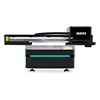
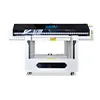
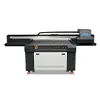
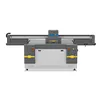
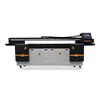
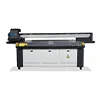
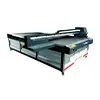
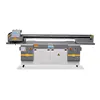


UV Printer Motion Systems Explained: Lead Screw, Belt, Linear Rail and Magnetic Drive
Two UV printers can look almost identical but have very different prices. They may use a similar printing area, similar printheads, and similar advertised resolution, yet one machine may cost significantly more than another. Why?
One important reason is the UV printer motion system.
The motion system controls how the printhead and printing platform move along the X and Y axes. Its design affects positioning accuracy, printing speed, vibration, noise, repeatability, maintenance requirements, and long-term reliability.
For buyers, this means that comparing UV printers only by printhead, printing size, or advertised resolution is not enough. The mechanical structure behind the printhead can have a major influence on the actual printing performance.
In this guide, we will explain the main UV printer motion technologies, including lead screws, belt drives, linear rails, and magnetic drive systems. We will compare their accuracy, speed, noise, maintenance, lifespan, and cost, and explain which motion system is suitable for desktop UV printers, 6090 UV printers, 2513 UV flatbed printers, and conveyor-type machines.
Most importantly, this article will help you understand one practical purchasing question: Why do similar-looking UV printers have such different prices?
UV Printer X/Y/Z Motion System Explained
1. What Is a UV Printer Motion System?
A UV printer motion system is the mechanical and electronic system responsible for moving the printhead carriage, gantry, or printing platform accurately during the printing process.
It normally includes several important components:
- Drive mechanism
- Linear guide system
- Motor
- Motor driver
- Motion controller
- Gantry or carriage structure
- Mechanical frame
In a typical UV flatbed printer, the printhead carriage moves along the X axis, while the gantry or printing platform moves along the Y axis. The Z axis controls the distance between the printhead and the surface of the material.
The exact architecture depends on the printer design. For example, some flatbed printers move the gantry while keeping the table stationary, while other machines use different combinations of carriage and platform movement.
Why Are X and Y Axes Important?
The X and Y axes determine where the printhead deposits ink. If the motion is unstable, inaccurate, or inconsistent, the printer may experience problems such as banding, image misalignment, uneven edges, or inconsistent fine text.
For commercial printing, one perfect sample is not enough. A professional UV printer must be able to reproduce the same result repeatedly over many production cycles.
That is why motion stability and repeatability are important when evaluating a UV printer.
If you are also comparing other major UV printer components, see our guide to UV printer printhead selection.
2. The Four Main Motion Technologies Used in UV Printers
UV printers can use different combinations of drive and guidance technologies. The four terms buyers commonly encounter are lead screw, belt drive, linear rail, and magnetic drive.
However, there is an important technical distinction: these technologies do not all perform exactly the same function.
A lead screw or belt is primarily a drive mechanism. A linear rail is primarily a guidance and support system. A magnetic drive system can provide controlled linear movement using magnetic force and is often combined with precision guidance and advanced motion control.
| Technology | Main Function | Speed | Positioning | Noise | Maintenance | Cost |
|---|---|---|---|---|---|---|
| Lead Screw | Mechanical drive | Medium | High | Low–Medium | Medium | Low–Medium |
| Belt Drive | Mechanical drive | High | Medium–High | Medium | Low–Medium | Low |
| Linear Rail | Guidance and support | Depends on drive | High | Low | Low–Medium | Medium |
| Magnetic Drive | Advanced linear drive | Very High | Very High | Very Low | Low | High |
There is no single motion system that is automatically the best for every UV printer. The correct choice depends on printer size, production volume, required accuracy, material type, operating environment, and budget.
3. Lead Screw Drive: Precision and Controlled Movement
A lead screw system converts the rotational movement of a motor into linear movement. The motor rotates the screw, while a nut travels along the screw and moves the connected carriage or platform.
A simplified structure looks like this:
Motor → Coupling → Lead Screw → Nut → Moving Carriage
Advantages of Lead Screw Systems
- Good positioning control
- Stable low-speed movement
- Good mechanical rigidity
- Suitable for precision applications
- Relatively affordable
- Easy to understand and maintain
Lead screws are particularly useful when controlled movement and positioning are more important than extremely high travel speed.
Limitations of Lead Screws
Because lead screw systems contain mechanical contact between the screw and nut, they can experience wear over time. Proper lubrication and maintenance are therefore important.
Compared with some high-speed belt or magnetic systems, lead screws may also have limitations in maximum travel speed and acceleration.
Poorly maintained systems can develop backlash or movement inconsistencies, which may eventually affect positioning accuracy.
Where Are Lead Screws Commonly Used?
Lead screw systems are particularly suitable for compact and medium-size UV printers where controlled movement, affordability, and stability are important.
For example, a desktop or A3 UV printer with a 300 × 450 mm printing area generally does not need the same high-speed motion architecture as a large industrial printer.
For these machines, a properly designed lead screw and linear guide system can provide an excellent balance between cost and performance.
4. Belt Drive: Why Is It Fast?
Belt drive systems use a motor and pulley to move a reinforced belt connected to the printhead carriage or moving platform.
A simplified structure is:
Motor → Pulley → Belt → Carriage
One of the biggest advantages of belt-driven motion is speed.
Advantages of Belt Drive Systems
- High travel speed
- Fast acceleration and deceleration
- Simple mechanical structure
- Relatively low manufacturing cost
- Easy belt replacement
- Suitable for long travel distances
This makes belt systems attractive for applications where productivity and fast movement are major priorities.
Does a Belt Drive Mean Lower Accuracy?
Not necessarily.
A properly designed, tensioned, and calibrated belt system can provide very good positioning performance. However, belt tension, belt quality, pulley alignment, mechanical rigidity, and control settings all matter.
Over time, belts can wear or lose their ideal tension. Regular inspection is therefore important for machines that operate continuously.
The key point is that belt drive should not automatically be considered a low-quality solution. It can be highly effective when correctly matched to the printer’s application.
Where Are Belt Drives Useful?
Belt-driven systems can be suitable for high-speed movement, long travel distances, and applications where production speed is more important than achieving the highest possible positioning performance.
They can also be useful in conveyor-type printing systems where continuous material feeding and high productivity are important.
5. Linear Rail: The Guidance System Behind Stable Movement
Linear rails are one of the most important mechanical components in a UV printer because they guide moving components along a straight path.
Unlike a lead screw or belt, a linear rail is primarily a guidance and support component.
This distinction is important when comparing UV printer configurations.
For example, a machine can have:
- Linear rail + lead screw
- Linear rail + belt drive
- Linear rail + magnetic drive
Therefore, saying that a machine uses “linear rails instead of a belt” may not describe the complete motion architecture.
What Does a Linear Rail Do?
A quality linear rail helps maintain straight and stable movement while supporting the moving carriage or gantry.
Important characteristics include:
- Running smoothness
- Straightness
- Rigidity
- Load capacity
- Repeatability
- Resistance to lateral movement
For larger UV flatbed printers, the quality of the guidance system becomes increasingly important because the gantry is larger and the travel distance is longer.
A rigid frame combined with stable linear guidance helps the printer maintain consistent movement throughout the working area.
This is one reason why two UV printers with the same nominal printing size can have very different mechanical performance.
6. Magnetic Drive and Magnetic Levitation: Why Does It Cost More?
Magnetic drive and magnetic levitation technologies represent a more advanced approach to linear movement.
Traditional mechanical drive systems rely heavily on physical components such as screws, belts, gears, and other contacting parts. Magnetic systems use controlled electromagnetic forces to produce linear movement with greatly reduced mechanical contact in the drive process.
This can provide several potential advantages for demanding production environments.
Potential Advantages of Magnetic Drive
- High acceleration
- Smooth movement
- Low mechanical friction
- Low operating noise
- High repeatability
- Reduced mechanical wear in the drive mechanism
- Excellent suitability for high-performance motion control
Because the technology is more sophisticated, magnetic motion systems generally require more advanced components, control electronics, engineering, calibration, and manufacturing processes.
That is one reason why a UV printer equipped with a high-end magnetic motion system can cost considerably more than a visually similar machine using a basic mechanical drive.
However, buyers should not assume that every magnetic system automatically produces better printing. The complete system still matters, including the motor, controller, guide structure, gantry rigidity, software, calibration, and manufacturing quality.
In other words, motion technology should always be evaluated as part of the complete printer architecture.
Lead Screw vs Belt vs Linear Rail vs Magnetic Drive
7. Lead Screw vs Belt vs Linear Rail vs Magnetic Drive
For buyers, technical descriptions are useful, but a direct comparison is often more practical.
| Factor | Lead Screw | Belt Drive | Linear Rail | Magnetic Drive |
|---|---|---|---|---|
| Main Role | Drive | Drive | Guide | Advanced Drive |
| Speed | Medium | High | Depends on drive | Very High |
| Positioning Control | High | Medium–High | High | Very High |
| Low-Speed Control | Very Good | Good | Depends on drive | Very Good |
| Noise | Low–Medium | Medium | Low | Very Low |
| Mechanical Wear | Medium | Medium | Low–Medium | Low in the drive mechanism |
| Maintenance | Medium | Medium | Medium | Low–Medium |
| Typical Cost | Low–Medium | Low | Medium | High |
| Typical Application | Compact precision printers | High-speed movement | Stable guidance | High-performance production |
Remember that these are general engineering characteristics. Actual printer performance depends on the complete mechanical and electronic design.
The best motion system is not always the most expensive system. The right system is the one that matches the printer size, application, production speed, accuracy requirements, and operating environment.
8. How Motion Systems Affect UV Printing Quality
Many buyers focus heavily on printhead specifications, ink type, and advertised resolution. These are important, but mechanical movement also affects the final image.
1. Banding
Inconsistent carriage movement can contribute to visible banding or uneven image formation, particularly when mechanical vibration or positioning errors interact with printing parameters.
2. Fine Text
Small text and fine graphics require accurate movement and precise ink placement. Stable carriage positioning helps maintain clean characters and sharp edges.
3. Layer Alignment
UV printers may use multiple ink layers or channels, such as color, white ink, and varnish. Accurate movement helps maintain proper registration between these layers.
This is particularly important when printing detailed graphics where white ink or varnish needs to align precisely with the color layer.
4. Edge Quality
Stable movement contributes to consistent ink placement at image boundaries. Poor mechanical stability can make fine edges appear less clean.
5. Repeatability
For commercial users, repeatability is often more important than achieving one perfect print.
If a sign shop, packaging manufacturer, promotional product company, or industrial printer needs to reproduce hundreds of identical products, the motion system must provide consistent positioning throughout production.
This is why buyers should evaluate repeatability and long-term stability, not only maximum advertised resolution.
9. Why Do Similar-Looking UV Printers Have Such Different Prices?
This is one of the most important questions when purchasing a UV printer.
Two machines may have the same 6090 or 2513 working area and may look similar from the outside. However, their internal configurations can be very different.
1. Printhead Configuration
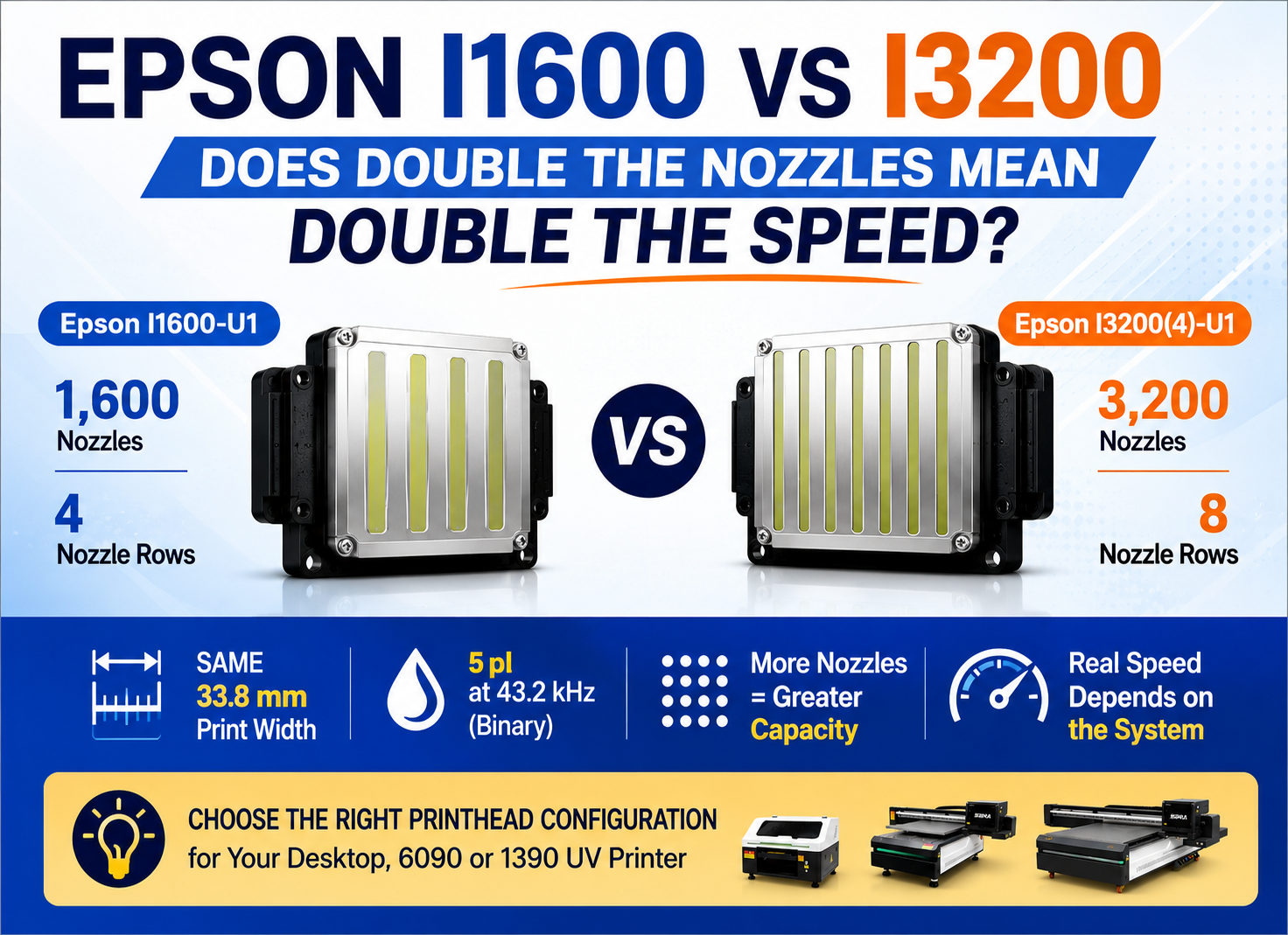
Different printheads can have different costs, performance characteristics, maintenance requirements, and production capabilities.
For example, professional configurations using Epson or Ricoh printheads can significantly influence the total machine cost.
2. Motion System
The drive and guidance system can also create a substantial difference.
A basic mechanical drive may be economical, while a more advanced system using high-quality linear guidance, precision components, or magnetic drive technology can require significantly more investment.
3. Mechanical Frame
A rigid frame and stable gantry are important for large-format UV printing. The quality of steel, structural design, welding, machining, and assembly can all affect production cost.
4. Vacuum Table
For flatbed printers, the vacuum platform is another important component. A stable vacuum system helps keep flexible or lightweight materials flat during printing.
Learn more about this topic in our guide to UV printer vacuum tables.
5. Ink System
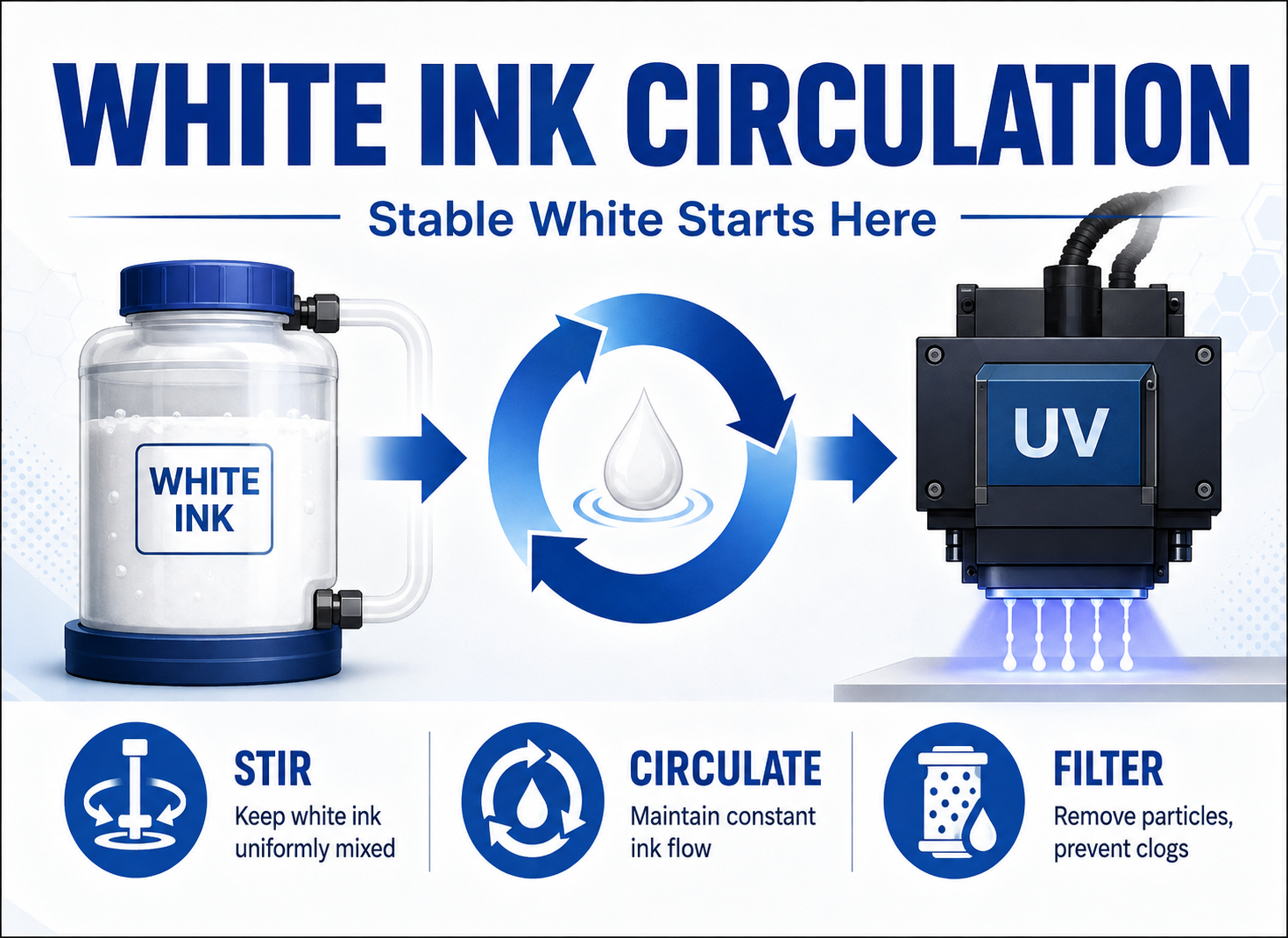
White ink circulation, ink supply stability, filtration, and ink management components can also influence machine cost and long-term reliability.
6. Electronics and Motion Control
Motors, drivers, controllers, sensors, wiring, and control software all contribute to the overall motion performance.
7. Manufacturing and Calibration
Precision components alone do not guarantee precision printing. Assembly quality, calibration, testing, and quality control are equally important.
8. Technical Support
Training, remote support, spare parts, software assistance, and after-sales service also contribute to the real value of a UV printer.
This leads to an important purchasing principle:
A lower purchase price does not always mean a lower total cost of ownership.
If a machine requires more maintenance, produces inconsistent results, or loses production time because of mechanical problems, the initial saving may disappear over time.
If you are evaluating the complete cost of ownership, see our guide to UV printer total cost of ownership and ROI.
Why Do Similar UV Printers Have Different Prices?
10. Which Motion System Is Best for Different UV Printers?
The best motion system depends heavily on the printer’s size and intended application. A compact desktop printer does not have the same mechanical requirements as a 2513 industrial flatbed printer.
Desktop and A3 UV Printers
For desktop and A3 UV printers, a properly designed lead screw combined with a linear guide system can provide a practical balance between precision, stability, size, and cost.
These machines are commonly used for:
- Phone cases
- Promotional products
- Small signs
- Gift products
- Personalized products
- Small packaging applications
Because the working area is relatively compact, extremely high-speed industrial motion technology may not provide enough additional value to justify the extra cost for every user.
6090 UV Flatbed Printers
A 6090 UV flatbed printer provides a larger working area and is commonly used for signage, promotional products, decorative panels, personalized products, and other rigid materials.
For a 6090 printer, buyers should pay attention to:
- Gantry rigidity
- Linear guide quality
- X/Y synchronization
- Drive mechanism
- Carriage stability
- Vacuum platform design
A precision lead screw and linear guide system can be suitable for many 6090 applications. More advanced machines may use magnetic levitation or magnetic drive technology when smooth movement, low noise, high repeatability, and demanding production performance are priorities.
For a practical comparison, see our 6090 UV flatbed printer product page.
2513 UV Flatbed Printers
A 2513 UV printer has a much larger working area, typically around 2500 × 1300 mm. The larger size creates greater mechanical requirements.
A large-format machine needs a motion architecture capable of handling:
- Long travel distances
- Larger gantry structures
- Higher mechanical loads
- Stable synchronization
- Consistent movement across the entire working area
For a 2513 UV flatbed printer, buyers should not evaluate the machine only by printhead model or maximum resolution. The complete mechanical architecture should also be considered.
A robust frame, precision linear guidance, reliable drive system, and appropriate motion control can contribute to better long-term production stability.
See our 2513 UV flatbed printer for an example of a large-format UV printing configuration.
Conveyor and Flexible Material UV Printers
Conveyor-type UV printers have different priorities from traditional rigid flatbed printers.
For flexible materials, continuous feeding and synchronization are critical. Applications can include leather, advertising fabric, mats, soft glass tablecloths, and other roll or sheet materials.
In these systems, buyers should consider:
- Automatic material feeding
- Stable belt movement
- Material tension
- Carriage synchronization
- Production speed
- Long-run reliability
For continuous production, the best motion system is not necessarily the one with the highest theoretical positioning specification. It should provide stable and repeatable movement throughout long production cycles.
Choosing the Right Motion System for Different UV Printers
11. What Should Buyers Check Before Buying a UV Printer?
When comparing two UV printers, do not stop at the machine appearance or headline specifications. Ask the manufacturer specific questions about the motion system.
1. What Drive System Is Used for the X Axis?
Ask whether the X axis uses a lead screw, belt, magnetic drive, or another technology.
2. What Drive System Is Used for the Y Axis?
The X and Y axes may use different mechanical configurations, especially on large-format printers.
3. What Linear Guide System Is Used?
Ask about the type and quality of the linear guidance system, not only the drive mechanism.
4. How Is Belt Tension Adjusted?
If the machine uses a belt, ask how belt tension is adjusted and maintained.
5. What Are the Positioning and Repeatability Specifications?
Do not focus only on maximum printing resolution. Ask about actual positioning accuracy and repeatability where applicable.
6. What Is the Maximum Carriage Speed?
Speed is important, but it should be evaluated together with print mode, resolution, pass count, and actual production requirements.
7. What Maintenance Does the Motion System Require?
Ask how often lubrication, cleaning, tension adjustment, inspection, or replacement is required.
8. Which Motion Components Are Replaceable?
For long-term operation, replacement availability is important. Ask about belts, bearings, guide components, motors, couplings, and other wear parts.
9. How Is the Machine Calibrated Before Shipment?
A precision machine requires proper assembly and calibration. Ask whether the manufacturer performs mechanical alignment, motion testing, print testing, and quality inspection before shipment.
10. What Technical Support Is Included?
A good machine configuration is only part of the purchase. Training, remote troubleshooting, spare parts, software support, and technical assistance can have a significant impact on long-term productivity.
12. How to Compare Two UV Printers Beyond the Price Tag
When comparing two machines, it is easy to focus on the final quotation. However, the purchase price alone does not tell you the complete value of the machine.
A better comparison should include:
- Printhead: model, quantity, and configuration
- Motion system: drive and linear guidance
- Frame: rigidity and structural design
- Vacuum table: platform stability and suction performance
- Ink system: white ink circulation and ink supply
- Electronics: motors, drivers, controllers, and sensors
- Software: RIP and motion control functions
- Assembly: manufacturing and calibration quality
- Support: training, service, and spare parts
In simple terms:
Purchase Price ≠ Total Value.
A machine that costs more may offer better mechanical stability, longer service life, higher production efficiency, or lower downtime. On the other hand, a more expensive component is not automatically better for every application.
The right approach is to compare the complete configuration against your actual production requirements.
13. Frequently Asked Questions About UV Printer Motion Systems
What is the motion system of a UV printer?
A UV printer motion system is the mechanical and electronic system that controls the movement of the printhead carriage, gantry, or printing platform along the X and Y axes. It includes drive components, linear guidance, motors, drivers, controllers, and related mechanical structures.
Is a lead screw better than a belt drive for UV printing?
Neither is universally better. Lead screws can provide excellent controlled movement and positioning, while belt drives can offer high speed and efficient long-distance movement. The better choice depends on the printer size, application, required speed, and accuracy requirements.
What is the difference between a linear rail and a lead screw?
A linear rail is primarily a guidance and support component, while a lead screw is a drive mechanism that converts motor rotation into linear movement. They can work together in the same UV printer.
Does the motion system affect UV print quality?
Yes. Motion stability can affect ink placement, fine text, image alignment, edge quality, banding, and repeatability. However, print quality also depends on the printhead, ink, RIP settings, calibration, platform, and other components.
Why are magnetic-drive UV printers more expensive?
Magnetic drive systems generally require more advanced components, control electronics, engineering, calibration, and manufacturing processes. They can provide high acceleration, smooth movement, low noise, and high repeatability, which may justify a higher investment for demanding applications.
What motion system is best for a 6090 UV printer?
A properly designed lead screw and linear guide system can be suitable for many 6090 UV printers. Higher-end production machines may use more advanced motion technologies when smoother movement, lower noise, and high repeatability are important.
What motion system is best for a 2513 UV printer?
A 2513 UV printer requires a robust motion architecture because of its larger working area and longer travel distance. Buyers should pay attention to frame rigidity, linear guidance, drive system, synchronization, and motion control rather than selecting a component based on its name alone.
Are belt-driven UV printers reliable?
Yes. A properly engineered and maintained belt-driven system can be reliable and productive. Belt quality, tension, alignment, pulley design, mechanical rigidity, and maintenance all affect long-term performance.
How often should UV printer motion components be maintained?
The maintenance schedule depends on the machine design and operating environment. Manufacturers should provide specific recommendations for lubrication, cleaning, belt inspection, guide maintenance, and component replacement.
What should I check when comparing two UV printers?
Compare the complete configuration, including printhead, motion system, linear guides, frame, vacuum table, ink system, electronics, software, calibration, warranty, technical support, and spare parts availability. Do not compare machines only by appearance or initial price.
Conclusion: Choose the Motion System Based on Your Production Needs
The motion system is one of the most important but often overlooked parts of a UV printer.
Lead screws can provide controlled and stable movement at a reasonable cost. Belt drives can offer high-speed movement and are useful for applications where productivity is a major priority. Linear rails provide the guidance and rigidity required for stable movement, while magnetic drive systems can provide advanced motion performance for demanding production environments.
However, there is no universal winner.
A desktop UV printer does not necessarily need the same motion technology as a 2513 industrial flatbed printer. A 6090 machine may require a different balance between precision, speed, and cost. A conveyor printer may prioritize continuous feeding and synchronization.
Most importantly, do not judge a UV printer only by its appearance or advertised resolution.
Two machines can look almost identical while having completely different internal mechanical architectures.
When comparing UV printers, ask what is inside the machine: What drive system is used? What linear guides are installed? How rigid is the gantry? How is the machine calibrated? What maintenance is required? And how will the system perform after thousands of production cycles?
Understanding these details allows you to compare machines based on real production value rather than simply choosing the lowest quotation.
If you are ready to compare different UV printer configurations for your application, explore our UV flatbed printer range or contact our UV printing specialists for configuration advice.
Technical Resources
For additional technical information about precision motion components, you can refer to the following manufacturer resources:
- Epson Printhead Technology
- Ricoh Printhead Technology
- THK Linear Motion Technology
- HIWIN Linear Motion Components